CONCERT REVIEW: CPO AUTUMN SYMPHONIES. At The Cape Town City Hall. On 16 April, 2026. Cape Town Philharmonic Orchestra, with Nicholas Chalmers (Conductor), Petrus Coetzee (Viola), AfriArts Chorus & VOX Cape Town: John Woodland & Siposethu Gxako (Choir masters), Nobilumko Mngxekeza (Soprano), Siphamandla Moyake (Soprano), Jason Atherton (Tenor), Zorada Temmigh (organ). Cape Town Philharmonic Youth Wind Ensemble (CPYWE): Charlene Verster (Conductor). ALBERT COMBRINK reviews.
The Cape Town Philharmonic Orchestra gave the third of its five April Thursday Autumn Season concerts at the City Hall to a packed audience. South Africa’s youth was showcased with the CPYWE, followed by South African violist and CPO member Petrus Coetzee in a challenging 20th Century Viola Concerto, and a choral spectacular, combining the forces of two Cape Town choirs: VOX Cape Town and the AfriArts Chorus, and three vocal soloists, all led by British conductor Nicholas Chalmers.
What a joyous celebration it turned out to be! I felt proudly South African. We have tremendous talent in this country. We can collaborate across genres, and organisations with different infra-structures can get together and put on a performance of an extremely high standard. We have the talent, and it deserves our continued attention and nurturing.
Soaring, cinematic melodies
Conductor Charlene Verster is now in her third year of leading the CPO’s Youth Wind Ensemble, which was established by Sean Kierman in 2003. It is part of the CPO’s education and development project, the largest of its kind in the country. Many musicians from this cadet-orchestra have made their way into the professional ranks of South African music organisations, including the CPO. The programme features six orchestral groups, and tonight, the winds performed “River of Life”, the first in a long line of enjoying and educational band compositions by Steven Reineke.
Full of soaring, cinematic melodies, colourful harmonies and exciting rhythms, “River of Life” is a light, but enjoyable composition, suitable for young musicians: challenging but not impossible. The tuning before the start of the piece, was alarming. But I was delighted. Audiences need to see youngsters struggle to tame their instruments, to better appreciate the ease and professionalism with which their adult counterparts achieve the end product. Verster brought variety of dynamics and good rhythmic control to the music. Some of the inner voices were a bit unsettled just after the opening, but all the moving parts soon fell into a comfortable groove that carried the audience along just long enough.
Johann Wolfgang von Goethe (1749–1832) is the towering German poet, playwright, and novelist of his time, and is still widely considered one of the most influential figures in German literature. A true polymath of the Enlightenment and Romantic eras, his work extended far beyond the written word; he was also a scientist, statesman, theatre director, and philosopher. His masterpiece, the dramatic poem “Faust”, is often ranked alongside the works of Homer, Dante, and Shakespeare as a cornerstone of Western culture. “Egmont” is his 1788 play, depicting the 16th-century struggle of the Flemish against Spanish tyranny. The play centres on Lamoral, Count of Egmont, a nobleman who resists the Spanish occupation of the Netherlands, and explores themes of political freedom, heroism, and the personal cost of rebellion.
Given Beethoven’s own Flemish ancestry, layered against the larger backdrop of the French Revolution in Beethoven’s own lifetime, “Egmont” was naturally a subject to which he was attracted, even sketching a potential opera and symphony on the topic. In the end, a suite of incidental music to the play was all that was completed, with the “Egmont Overture” Op.84 being the strongest and most popular of the 9 pieces in the suite. Considered by some as a little “Symphony of Victory”, it is known for its dramatic depiction of oppression, sacrifice, and final triumph.
The piece is well written and communicates its journey without too much confusion. I would have liked a bit more revolutionary drama in especially the opening section. This is after all F minor, Beethoven’s key of choice for the “Appassionata” Sonata Op.57 and the String Quartet Op.95 “Serioso” and already two years past the powerful 5th Symphony. Throughout the work it felt as if the back section of the violins were not always matching the effort of the front desk and some of the climaxes felt like they needed a bit more heft. The woodwinds handled their angelic interjections between the string growls beautifully. Phrasing and dynamics remained in mostly polite parameters, except for the hunting Horn Quartet who rang out with energy and Beethovenian rebellion.
AfriArts Chorus and VOX Cape Town
Taking joy in the pure quality of sound at a Symphony concert, is not necessarily linked to volume, in fact, it is often quite the opposite. But I can honestly say I was quite unprepared for the rays of sunshine that flew off the stage from the two combined choirs in the Mendelssohn Second Symphony. The AfriArts Chorus (under Siphosethu Anthony Gxako) and VOX Cape Town (under John Woodland) combined, made an absolutely thrilling sound. Strong altos and tenors made for intensely satisfying voice-leading work – something Mendelssohn was particularly good at, and the sopranos produced consistent bullseyes with all the high note targets. I did not catch all the words: this is a given in choral music, in choral music at the City Hall, and a wordy German text.
A translation was provided and I felt flattered that they thought I was still young enough to be able to read such small print, but alack alas, I had to go on memory and deduce from the odd word I could make out on the page. It is basically a celebratory praise song with Biblical words, depicting themes of darkness turning into light, gratitude and universal praise. For example:
Psalm 150 & 33: The opening and closing chorus praises the Lord with music and song (“All men, all things, all that have life and breath”).
Psalm 40: “I waited for the Lord” (Ich harrete des Herrn) is featured in a famous soprano duet.
Psalm 116: Addresses despair and finding refuge in God: “The snares of death encompassed us round about” (“Stricke des Todes hatten uns umfangen”).
The Lobgesang (Hymn of Praise), his final symphonic work but published as the 2nd of his 4 full Symphonies, was commissioned by the city of Leipzig from its Kapellmeister Mendelssohn, to commemorate the 400th anniversary of the invention of the printing press in 1840 – hence the use of Lutheran translations. Is it a Symphony, Cantata, or Oratorio? The work has elements of all three categories. But, at the opposite pole from Beethoven’s Ninth – which was an obvious model – this contains a symphonic miniature in three movements, acting as an overture to the sung part of the work, which is twice as long. Then, this splendid ‘Symphony-Cantata’ expands into a sweeping vocal and choral epic. A subtle but highly effective change of lighting added a festive touch to the proceedings, as well as flowers on the podium one might normally scoff at as a needless expense. It looked beautiful and it lifted the evening out of the ordinary symphony season, to a celebratory event. Much appreciated.

The soloists were superb. Two Lirico-spinto sopranos Nobulumko Mngexekeza and Siphamandla Moyake provided an exquisite blend in their duet, and Mngexekeza shone in her solos. High notes were managed with power, beauty and poise and she flew over the orchestra and choir when required. Her theatrical coup – entering at the very top of the city hall to unfurl her glorious “The Night is Departing” into the vast space – is the kind of goosebump moment that one will remember for decades. Tenor Jason Atherton stood in for an indisposed soloist at the last minute, and pulled off a triumph. With an exceptionally beautiful and unique voice, perfect German diction (the best of the evening), impeccable musical taste, and sensitive phrasing, he delivered a superb performance. This is a voice for Lieder, a voice for Oratorio. Take note of this name, you will see it again. Now let’s hear him in “Elijah”, “The Creation”, “Paulus”, “Judas Maccabaeus”… This is a tenor of note.
Speaking of repertoire: conductor Nicholas Chalmers introduced his performance with a few words from the podium and at one point said that the only Viola Concertos were by Walton and Bartók. I am hoping he misspoke and meant perhaps that these are the most famous ones. Because there is Vaughan Williams, Berlioz, Bruch, Schnittke, Martinů, Hindemith, not to mention very accessible modern works of recent years by Jennifer Higdon, Joan Tower, Sally Beamish….

Viola Concerto by Béla Bartók
CPO Principal Violist Petrus Coetzee chose to play the Viola Concerto by Béla Bartók, left unfinished at his early death of cancer, and completed by his pupil Tibor Serly. It is exceptionally hard to play, and remains the most recalcitrant of all Bartók’s concertos. From his final hospital bed, Bartók was deliberately negotiating with his publisher to procure the best possible price for his Third Piano Concerto, purposefully written in a slightly “softened” and more accessible style, hoping that popularity would ensure more performances, ensuring an inheritance of royalties to his widow after his death. It therefore seems strange to me that the Viola Concerto – of the same period – is so un-userfriendly by comparison. Did he desire it to be so complex? How complete was the work when Serly took ownership of the sketches? How much of the work is actually Bartók and how much is Serly? Someone with a PhD thesis to write, can answer these questions.
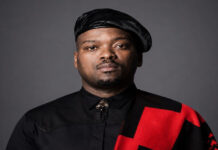
Bartók’s work are often complex landscapes, with thick orchestral undergrowth, from which images and ideas gradually emerge. We see this in “Blubeard’s Castle” or the “Miraculous Mandarin”. The outer movements of the Viola Concerto seem to have a lot of undergrowth and therefore, needs deliberate spotlighting of ideas to help the listener make sense of it. Here I felt that both soloist and conductor let the work play itself and I needed more help in negotiating the middle-ground between melody and texture. Coetzee – dressed in a theatrically dramatic black and white shirt – has a confident and attractive sound, but the orchestra sometimes took over in climaxes. The middle movement was truly memorable and exquisitely played: the lyrical viola sang with a rich, full tone which filled the hall without forcing. It was haunting.
Coetzee’s sound retains a strong core at all dynamics and even the most virtuosic passages remained controlled and gracefully played. The viola is situated both acoustically and in its range, between the higher violins and the lower bass of the cellos and double basses. It neither has the piercing cry of the violin, nor the baritonal heft of a cello, rather being the orchestral glue that both keeps the bass and the treble together and separated. It has a unique sound that recalls ancient instruments such as the Georgian Duduk or the Azerbaijani/Iranian balaban. It sings in the range of perhaps a Mezzo-soprano, and its warm, thick tone is unique. It was a joy to hear the viola as a solo instrument, and played so well. I hope it will not be so long before we hear it again, and perhaps we can introduce audiences to more of the magnificent music written for this very special instrument.
What: Cape Town Philharmonic Orchestra, Conductor Nicholas Chalmers, Petrus Coetzee (viola), AfriArts Chorus & VOX Cape Town, CPYWE
WS