SYMPHONY CONCERT REVIEW. Thursday, 30 November, 2023. At the Cape Town City Hall. CPO conducted by Bernhard Gueller, soloist Leo Gevisser. Beethoven: Piano Concerto No.1 in C Major Op,15 Wagner: Vorspiel und Liebestod – from “Tristan und Isolde” Strauss: Tod und Verklärung. ALBERT COMBRINK reviews.
The Cape Town Philharmonic Orchestra brought its 2023 City Hall Symphony Season to a close with a programme exploring the surprisingly enjoyable topics of Life, Love and Death. Tag-lined “German Splendour”, we were treated to the most sparkling of Beethoven’s Concertos, through Wagner’s harmonically far-reaching “Tristan”, to the extreme virtuosity of the Strauss tone-poem.
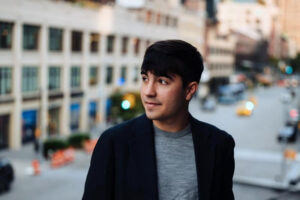
South African pianist Leo Gevisser is currently completing his music degree at Juilliard under legendary teacher Jerome Lowenthal. His is a searing intellect aligned with an alarmingly natural musical gift, and one cannot wait to hear where this will go in a few more years.
Crystal-clear articulation
He simply seems incapable of clumsy phrasing, and every theme and pattern is explored in minute detail and mined for the maximum emotional and musical content. His playing seemed to align Beethoven’s First (but the third he had written) Piano Concerto with the concertos of Haydn and Bach: crisp fingerwork with crystal-clear articulation made a case for Beethoven as a composer of line, rather than the richer pianistic textures that more developed modern pianos would afford him 20 or 30 years later in his career. Gevisser made the most of contrast with lighter-pedalled scampering to those Mozartian drops into melodic material where the lyricism takes precedence.
Expect a surprise
Gevisser offered a first movement Cadenza by Beethoven himself: a brave choice as it turns out, because Beethoven in his early days, simply improvised his cadenzas and did not write them down, leaving us to rely on stylistic guesswork by Ries or Czerny. But having to teach them to the Archduke Rudolph of Austria, and being unhappy about plagiarising pianists who were passing off his improvisations as their own – the older Beethoven set out to commit to paper, a set of cadenzas for the concertos. The cadenza for the 1st Concerto is the longest of the set and ironically the most harmonically daring and pianistically demanding – giving it a very different character to the rest of the concerto. As always with Gevisser, expect a surprise.
The encore was the Brahms/Busoni Chorale Prelude Op.122 No.11 “O Welt, ich muss dich lassen”, the last work he composed (for organ), after the death of his beloved Clara Schumann and knowing that he had cancer which would soon take his life. It was the perfect encore, played with exquisite voicing belying its original concept as an organ work – based on a melody by Bach, already paid tribute to in the Concerto, and providing the missing link of the 60 years between the Concerto and the Wagner that was to follow.
Most accomplished performance
The orchestra shone throughout, and to many ears this performance was one of the technically most accomplished performances of a very challenging season. The glow of recent Barber and Wagner on the programme seemed to culminate in the most exquisitely full-voiced but appropriately reverent opening of Wagner’s opening Prelude of his great opera “Tristan und Isolde”. What could so easily sound tentative, or over-thought, simply came out as a deep but glowing sigh from the cellos. There was a naturalness to the vibrato that immediately spread to the rest of the orchestra, and it felt as if we genuinely heard a new sound from the orchestra. There was a real sense of the instrument working as one big unit with intensity of vibrato and such integrated between all the sections.
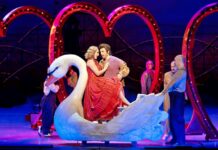
The ”Vorpsiel” led straight into the “Liebestod”, which – tellingly – was originally called the “Verklärung” by Wagner himself. The idea of performing the Liebestod without soprano struck many as a surprise, as when these two excerpts are paired, an ample-voiced soprano would usually glide on to do her bit as written in the score. But Wagner himself had performed this pairing without soprano, as did Franz Liszt, even before the opera had been premiered. While some would have missed the soprano, the orchestra made a passionate case for the orchestral writing, literally proving the point that Wagner’s music dramas were no longer conventional operas, but a brand new conception of integrated art where the orchestra was at least an equal member. The climax was phenomenal, and yes, a tad faster perhaps than a soprano would have liked, but the sheer beauty of the orchestral sound was a joy.
Imaginative orchestral textures
From opera without words, we took on another “Opera Without Words”, because for Strauss, that is essentially what a tone-poem was. A surprising theme for a work, perhaps, from a 25 year old: death – or particularly what happens before and during it and perhaps a little bit of what we imagine happens afterwards. It should come then as no surprise that the summer before, Strauss had worked at Bayreuth, as a répétiteur (a vocal coach) for – you guessed it – “Tristan und Isolde”.
Bernhard Gueller set the perfect tempo for the disturbed heart-beats that open the work, and while the woodwinds were perhaps not instantly responsive to the real pianissimo being offered by the strings, the effects were all one would expect from Strauss: colourful and imaginative orchestral textures of great delicacy, that could be whipped up into a gigantic swirling tornado of a climax. The work showed off solos for each section, and especially concertmaster Farida Bacharova was piercing, accurate and exquisite. The cavalry in the back row never dominated, but rather the brass provided punctuation and glisten-and-gleam at the climax.
For a programme with so much mention of death and dying, the effect was to leave the audience “uplifted” in the most heart-felt meaning of the word. As usual, it was lovely to see so many young people in the audience, and visible proof that the orchestra is relevant and of importance to people from many different communities in the city.
Symphony Season resumes on 11 January with visiting Russian virtuoso Olga Kern, followed by two rising international stars making their Cape Town debuts: Michael Laipang (Violin) on 18 January and Luka Cootzee (Cello) on 25 January 2024.
What: CPO Leo Gevisser review
Reviewer: Albert Combrink
WS