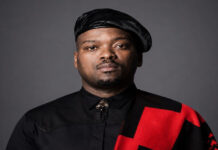
SYMPHONY CONCERT, 19 October, 2024. At The Cape Town City Hall. Verdi: Messa da Requiem; soloists Paulina Malefane, Violina Anguelov, Sipho Fubesi, Thato Machona; Philharmonia Choir and CPO conducted by Daniel Boico. DEON IRISH reviews.
I have remarked before on the number of memorable choral concerts that I have attended in the City Hall – more particularly in what were, in retrospective, something of the “glory years” of choral music in this city, in the 70’s and 80’s of the last century.
There were, at that time, two vibrant choral foundations in operation: the CTSO’s own Symphony Choir (under the musical direction of Barry Smith) and by The Philharmonia Choir of Cape Town (for most of that period trained by John Badminton), each having well over a 100 singers.
They presented fairly regular performances of works as diverse as Dvorak’s Requiem, Orff’s Carmina Burana, Honegger’s Le Roi David and Britten’s War Requiem. There was also something of a tradition of the CTSO’s final concert before its mid-year break concluding with the Beethoven Choral Symphony.
Musical force to be reckoned with
Both choirs thereafter went through somewhat difficult times – more particularly the Symphony Choir, which had become an autonomous body after the demise of the CTSO. It is very gratifying indeed to record an increasingly apparent turn-around in both of these choirs’ fortunes, as also the emergence as a musical force to be reckoned with of the New Apostolic Church Choir.
A point needs to be made here: the modern tendency of Education Departments to side-line the importance of musical education in children’s formative years in favour of the technical or the scientific is having a deleterious effect on community music-making. Music is seen as quite appropriate for those particularly talented individuals, who are increasingly isolated into individual tuition; but the collective music-making of school choirs is in more and more of our schools a thing of the past. We should value highly the schools – and the teachers involved – who fight to keep this choral tradition alive.
Disciplined, accurate, engaging
Experiencing this choir of some 130 singers singing one of the greatest choral scores with verve, musicality, overt enjoyment and a unified sense of purpose, one was struck by how many of the faces were regular choristers, who have sung and are still singing in a number of different choirs, secular and liturgical, and who first discovered this lifelong joy from an initial experience in school choirs.
On this occasion, the choir had been trained by the dynamo that is Richard Haigh and then rehearsed by conductor, Daniel Boico. This careful preparation showed in a performance by the choir that was disciplined, accurate, and immensely engaging. There were, of course, some episodes of insecurity, of hesitant attack or of indifferent ensemble (predictably in the taxing double choir fugue of the Sanctus).
Intonation was for the most part exemplary – and the chorus cannot fairly be taken to task for a flat entry in the Agnus Dei which merely followed the pitch to which the female soloists had drifted.
But set against that the wonderful pianissimo of the opening sotto voce “Requiem aeternam” (directed to be sung “as soft as possible”) or the overwhelming outburst of the “Dies Irae” – musical effects that can only be achieved with a large body of good singers – and the blemishes became of little moment. The member of the choir, and those involved in preparing them for this performance, can be well satisfied.
The quartet of soloists did not have as uniformly happy a time of it. It is appropriate to commence with tenor Fubesi, who has the first solo utterance in the magnificent burst into the Kyrie following the Introit, with its glorious soaring phrase to a top G sharp. It was marred by a rather wayward vibrato and some rhythmic uncertainty in the concluding cadential phrase.
But it appears to have been just some initial tension, since his next appearance, in the Quid sum miser trio, demonstrated a much more focussed tone and lovely phrasing. There was some indifferent ensemble from the quartet in the Quam olim Abrahae fugato writing, but Fubesi’s individual contribution – notably the quite splendid delivery of the descending chromatic scale that commences on an exposed top A flat. The delivery of the Ingemisco (its delicate lyricism alternating with repeated declamatory top B flats) was a highpoint of the performance.
The other of the lower voice, baritone Machona, gave a solid performance of what is at times a rather ungrateful part. The opening Kyrie showed a good top D with plenty of power; the bass contribution in the quartet writing was nicely foundational, and the difficult wide-ranging solo in Tuba mirum well negotiated. I enjoyed, too, his Oro supplex – which always sounds to me like an excerpt from Carmin Burana.
Turning to the upper voices, soprano Malefane did not have a uniformly successful evening. It is true that her upper register was consistently beautiful with some truly gorgeous floated top notes; but there was at times an unlovely quality in the lower register, a certain coarseness of tone that ill-suited the writing (most notably in the Libera me). She did appear insecure at times, and I thought that the loss of pitch in the unaccompanied opening octaves of the Agnus Dei was primarily her responsibility.
Lastly, mezzo-soprano Anguelov, who can be well satisfied with her consistently excellent contribution. I feel sure that I have heard her sing this work before – although I could not find a review of that performance; but, even if not, she demonstrated a confident familiarity with the score which made her contribution to the quartet of soloists invaluable.
Orchestral playing was assured and in general achieved a lovely realization of the wonderful writing. There were, however, episodes in which – in particular – balances were questionable. One such episode was the brass fanfare build-up to the entry of the basses on Tuba mirum. The brass ensemble (and some pitching) was not what it might have been; but the overwhelming fortissimo entirely drowned the chorus basses, who numbered less than thirty mostly amateur singers. That is no fair match against twelve brass players giving it their all.
Fine playing from the orchestra
That said, Boico undoubtedly obtained some fine playing from the orchestra and effects such as the anxious celli figurations in the Quid sum, the bassoon obligato and the trombones’ raucous conclusion of the Benedictus were splendidly done.
Despite all the overt exposure of brass and wind instrumental choruses and solos, the orchestral heroes of this performance were in my view the string orchestra, who delivered an accurate and musically compelling account of an exceedingly demanding score. What is the more pleasing, however, is the quality of the combined string sound, which – particularly in mid-range dynamics – is burgeoning into a lovely and characteristic sheeny warmth.
Where Boico didn’t quite succeed was in maintaining ensemble between orchestra and the quartet in their various combinations, episodes in which there crept in a degree of divergence just sufficient to engender a sense of rhythmic instability. But that is undoubtedly partially the product of limited rehearsal time.
These criticisms aside, the live performance of this masterpiece was an undoubted musical joy and the City of Cape Town should take considerable pride in it being performed within its bounds at all, let alone at this level of excellence. Which should, of course, translate into more committed financial an institutional support from all applicable levels of government. Perhaps our new Minister of Arts will step onto the podium ….
Book for the Cape Town Philharmonic Orchestra’s Summer Symphonies Season here.
What: Verdi Messa da Requiem review – Soloists Paulina Malefane (soprano)
Violina Anguelov-Hobbs (mezzo-soprano), Sipho Fubesi (tenor), Thato Machona (bass)
Reviewer: Deon Irish
WS