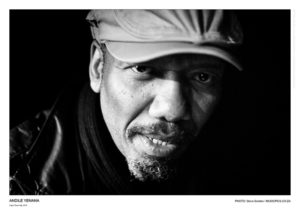
Andile Yenana is appearing on four stages within the Mother City writes KEANETSE MOKHOTHU. She caught up with the pianist to find out what’s in store for Cape Town audiences.
How has your journey into the 21st century been?
I do not know man. When I started out, I never really looked at the trajectory of my career in that way. When the 21st century kicked in, I was having a gig in Robben Island. There were all these musicians, Jimmy Dludlu, Manu Dibango and Bheki Mseleku was also there as well. So you know, we were the most active musicians of that time. We ushered it in.
Getting into the 21st century was smooth sailing for me. I regard myself as part of it. My debut album was released in 2003, and Voice recording in 2005. In a way, my music, our music, is 21st century South African music

Your most memorable experiences. What have they taught you?
Memorable experiences, just being a young musician, getting onto the scene. You know, it was such a wonderful experience. Everybody loves when you are young musician, you are a new voice. There is so much attention. You are being introduced into a new world and you get to tour and be in spaces you never thought you would be in. Plus, you experience different cultures in the process. Being fearless too. Doing what you please, what you want.
The memorable part is the love. You come in and once you are in the middle of the whole thing, it is up to you how you get out if you feel you want to get out or being stuck in it because there are not a lot of people there to see what you are going through now that you are in. The shaping of Andile Yenana the musician and the man. Well, this is another thing. I created Andile. It is an identity together with the man that I created. This creation happened when I entered the industry. My full name is Matshaw’andile. I could not use it as it was long and people had pronunciation issues. So, I decided, I am going to shorten it. Easy access.
As a jazz educator, how does SA jazz education within institutions mold a musician and their career?
I mean it is different approaches with different institutions. With my experience, the kind of programme Natal University offered was one where a lot of active elders like Winston Mankunku Ngozi, Barney Rachabane were invited by Darius Brubeck for short residences, concerts and student interactions. Bra Hugh Masekela came for a fundraiser during my second year and I got the opportunity to perform with him. A few weeks later, he returned for his short residence. I gigged with him again to a full house. I had sweaty palms and I actually remember the kind of perfume he was wearing. It remained in our practice block two weeks after his departure.
From quartets to quintets, which do you prefer?
I came out of a Zim Ngqawana experience, who worked a lot with a quintet and Steve Dyer who would have about three horns upfront. I think it kind of resonated, kind of attracted a lot of the older guys in terms of how they composed their music and also, the fact that we did not have lyrics. So, we needed instruments that could be able to carry a melody and make it audible enough for people to follow. It is still part of my make up as a musician, as a composer and leader.
I have not really had much of a chance to explore trios. When I entered the scene we did not have those spaces for trios. We had jubilant people post 1994. We needed to cut across the excitement. Be part of it. The horns played a big role. Remember the advent of the vuvuzelas as well? It was a happy, happy, happy time. The horns, trumpet, they carried and still carry the sound. The second line. It is all there. What is jazz without the horns, really?
Tembisa (The People) is ringing in my ears, and Dream Walker evokes certain emotions. Please take us through your approach to composition.
I do not have a specific way of composing. Whatever comes, comes. I mean, I have had serious ideas of composition even in my sleep. For me, a good night’s rest is a whole composition coming to me in my dreams.
Then I wake up and tell people, “Hey man, you missed out.” On the other hand, I sometimes go through spells where I have nothing to say. So yes, I do not have a specific compositional style.
Do you prefer live gigs or studio recording?
I enjoyed both at certain stages of my career. When I was younger, I enjoyed everything that had to do with music. There were also not a lot of distractions, like phones. None of these external things we turn to these days to distract ourselves existed back then. Now, there are a whole lot of responsibilities that take you away from why we are here, doing what we are doing. Studio requires a lot of preparation.
Do I get to have these kind of preparations? No. I prefer live recordings. They can be recorded and released. We will see however as time goes by, whether I will rekindle some of the passion I had for studio recordings.
Live performances are beautiful, I love them. In fact, I have recorded some live music that will be coming out soon. I always pray for a great live performance and not to have too many expectations from the musicians. Expectations beyond what you have put out. You learn to adjust and adapt. The South African audience is also incredible. They are a mix of old and young. To me, our South African concert-goers have this sort of uniqueness about them.
Any words of wisdom to upcoming artists to ensure a fruitful career?
Like I said, when young people come into the industry, they are loved by people, regardless. All they need to do is gather as much information as possible and guard against saying things that could potentially catch up with them in their future. I discovered for myself that freedom, comes with having to guard what you say with your mouth in certain instances.
There are times where I would reflect on what I would have said in my youth. Cringeworthy things, whoah! But then, how do you live your life as a young person being careful of every step? It would be tedious. So young people need to embrace their freedom. It has been laid out there for them. “Hey, come in. Do not tiptoe. Here is the music. Here are your traditions. This is your heritage. Now, do you.” This is what young people need to do. This is what they are supposed to do anyway.
How likely is a new Andile Yenana release?
It is coming. It is a project I basically started in 2018, but was unable to release it. It is however still relevant for release late 2023, or sometime in 2024. It will be something worthwhile for people to hear. Moreover, I have been fortunate to do productions. McCoy Mrubata, Dumza Maswana and Tumi Mogorosi asked me to produce their albums. I am quite grateful and humbled that they requested me to collaborate with them. I approach things in a different way, such as this one. Albums do not have to come from me individually.
Andile Yenana Cape Town gigs
Grub & Vine: Blue Room
Thursday, 29 June 2023, from 7pm
R350 for the evening
103 Bree Street, Cape Town
Tickets www.theblueroomza.co/welcome, 087 153 5244
Alliance Française
Friday, 30 June 2023, from 7pm
R150 Adults, R60 Alliance Française students
155 Loop Street, Cape Town
Tickets Quicket
The Athletic Club & Social
Saturday, 01 July 2023, from 8pm
R200
35 Buitengracht Street, Cape Town
Tickets Quicket
Kwa Sec
Sunday, 2 July 2023, from 4pm
R120 adults, R100 pensioners & students
Intshinga Street 52, Gugulethu
Tickets Quicket
Who: Andile Yenana interview
WS