A gig in an intimate lounge is very different to a huge stadium. Gareth Hadden, Business Director of Formative stage and production design agency, says that “creativity knows no budget, it’s all about the balance.” Apparently it’s “all part of the fun and creative mayhem!”
Walk us through the creative process from conceptualising show design
What’s fantastic, as well as challenging about music shows, is that we never have a finite brief and everything needs to be created from scratch. This is where collaboration becomes key, as no creative department can work without the other. Every artist has a process, but essentially you must work together in a chicken and egg sort of way. In a music show, the music will be a driving factor in how the show will flow, however, we can never say when we are going to receive the final music set, and we can’t let this delay the set-design. So, it’s up to everyone to work around things. For instance, the choreographer won’t know how the space can used on stage until the stage design is signed off, so you’ve got to be able to work in an interdisciplinary blur, and then arrive at a finished product where everybody knows what’s happening. It’s all part of the fun and the creative mayhem. There is a technique or art to being able to work amongst the organised chaos, although it can be stressful. Our role is to always to adapt in a professional manner.
How does the venue influence the outcome of a gig?
Creatively, a lot comes from the space; the venue will determine creative ideas. A gig in an intimate lounge is very different to a huge stadium, and sometimes the only thing we know is the venue and the budget. We shouldn’t allow ourselves to be restricted by budget, creativity knows no budget, it’s all about the balance.
There is also a huge difference between touring and a once off show. When a show is touring, we must work within new spaces and with different elements each time. We once did a really cool show for Converse in a shipping container yard, and inspired by our surroundings, we built a stage utilising all the shipping containers we could. We also try as much as possible to collaborate with the artists. We are essentially there to support their vision and translate it in what we know how to do best.
How do you create moments that capture the emotion behind tracks?
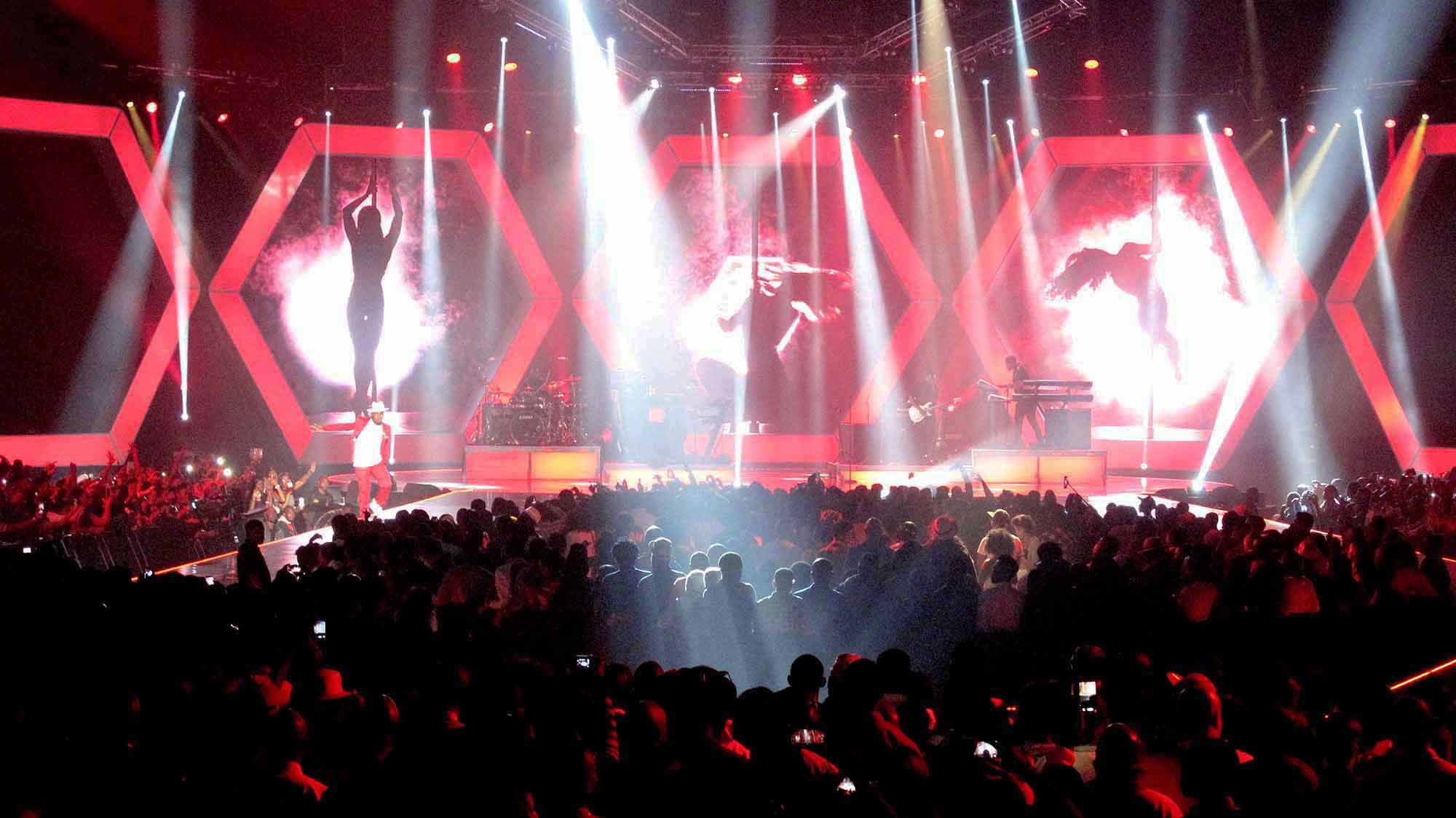
People can over-complicate things, you don’t always need a million lights for a show to create a ‘wow’ factor. You can bring a stage alive by playing with the different elements on stage piece by piece. For Cassper Nyovest’s Fill Up Orlando Stadium concert last year, it wasn’t about flashing lights, but more about highlighting key moments that not only had a visual impact, but an emotional impact too. It’s great to have a nice stage, a nice song and eye-catching dancers, but the real moments are when all those synchronise in perfect harmony.
For example, one of the key emotional moments in Cassper’s show, was one we didn’t have time to rehearse. It was the moment when he spoke about his grandmother passing. We had Cassper sit on an elevated structure in the centre of the stage as it rotated, and somehow with his instinct as a performer and our combined vision for the moment, we managed to pull it off. It was the interdisciplinary collaboration that came together so well to produce a sincere moment in a big ‘raucous’ stadium show. It was truly powerful.
How do you merge graphics, digital art and video?
We like to work with non-traditional screen sizes, which are your square TV type screens. For example, with the Fill Up Orlando concert, we had what appeared to be cubes or long rectangular 3-dimensional shapes, and we played with the types of optical illusions that would look good in those shapes. The goal for us is to transcend the idea that visual media on screens need to be graphics, and to think of it as a means of heightening set design by using video as light, or using the screens to create a virtual space. This makes for a more interactive and entertaining experience.
We enjoy getting creative with how we use video and screens. There is so much more you can do with screens than to stick pretty pictures on it. Light and video can work so well together. We’ve used big blocks of colour on screen as a light source and played with different shapes and sizes of the light to create optical illusions. The more these processes are seen in an integrated way working as one, the more efficient a production can be.
Where do you find inspiration?
We take a lot of inspiration from everyday life and architecture and buildings. We also have an inspiration file at the office that our team populates with cool stuff. We are very collaborative, so an idea will come to the table and get polished by the team. I also think the internet has changed our understanding of sourcing inspiration in a positive way. Some of the team members use Pinterest or Instagram to create mood boards for projects. It’s great because we can be inspired by things that we wouldn’t ordinarily have the chance to see in life.
Share examples of overcoming infrastructure challenges?
Each venue comes with its own fun and games attached to it. Access is usually a problem, as we can’t always get in as early as we would like to start set-build. At certain venues, they won’t allow you to rig in the roof, and some buildings have very specific size specifications regarding what can fit through doors and in lifts. So, we have lots to work around.
What’s next?
It’s always hard to say before dotted lines are signed, but watch this space! Amongst some big-name music shows on the cards, we will also be working on the upcoming Santam and Sanlam conference and are currently working on a passion project.
Web: www.formative.co.za
Social media:
Twitter: www.twitter.com/formativelive
Facebook: www.facebook.com/Formativedesign
WS