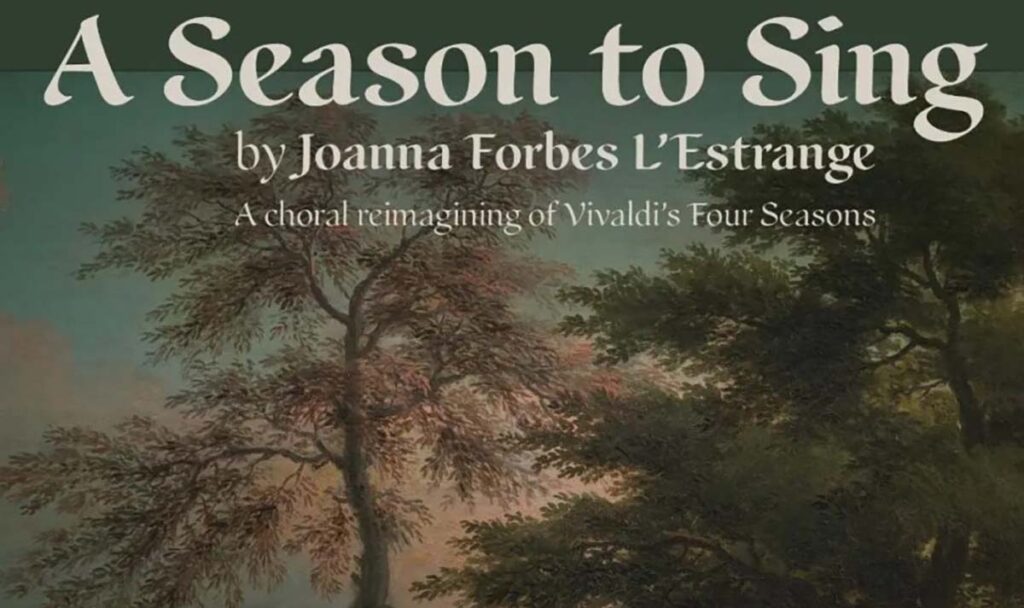
TRUE VOICES CONCERT REVIEW – A SEASON TO SING. On 13 September, 2025. At St. Andrew’s Presbyterian Church, Somerset Road, Cape Town. TRUEVOICES conducted by Patric Corder & Joanna Forbes L’Estrange. ALBERT COMBRINK reviews.
True Voices is a local mixed-voice choir who perform mostly “a capella” (without accompaniment. Founded in 2000, they celebrate 25 years of singing a specialised repertoire of mostly sacred music, but also taking in the world of folk-songs, madrigals and other arrangements, in between their mainstay of liturgical services, weddings, concerts and larger formal music-worship events such as Choral Evensong and Passion Services at the Church of the Good Shepherd in Newlands and an annual “Service of Nine Lessons and Carols” in December.
Joanna Forbes L’Estrange
A Season to Sing became The Reason To Sing when North-Whales born vocalist, choral composer and choir director Joanna Forbes L’Estrange was commissioned by 55 choirs around the world, to write a choral work that would have universal appeal both for audiences and be fun for the singers to perform.
It seems that the composer has either attended most of these performances or actually travelled and conducted some of them. In keeping with her vision of reaching a wide audience, and making the experience as accessible as possible, the work is a straight-forward reworking of a perennial instrumental favourite – the Vivaldi Four Seasons.
Performable with small string ensemble, or as in this concert, with Grant Brasler on the organ, the work is within reach of amateur or semi-professional choirs, but obviously benefits from choirs with more concert- than communal- singing experience.
The Crosseyed Pianist
The Vivaldi work is special to the composer – her father used it to teach her the time-signatures, as so much of the baroque style is based on dance movements. 2025 is also the 300th anniversary of the work’s publication, so an anniversary tribute was in order. An interview with the Crosseyed Pianist provides further explanation for the choice:
“One of the reasons that this particular work is so famous is because it’s programmatic – in other words, the music describes something specific – and was published with a programmatic title. Everyone, wherever they are in the world, can relate to the changing of the seasons and what makes each season different from the next. A piece called Violin Concerto in E major RV269 Op.8 No.1 has far less appeal to your average music-lover than a piece called Spring! Whereas Beethoven’s Piano Sonata No.14 in C# minor Op.27 No.2 wasn’t given the title Moonlight Sonata until long after the composer’s death, The Four Seasons was published with that title. It was a genius move!”
“Vivaldi is known to have loved a series of paintings of Italian landscapes by his contemporary Marco Ricci, who was living in Venice at the same time, one of which we’ve used as the cover for the vocal score. The paintings inspired Vivaldi to write sonnets describing the seasons; the sonnets inspired the violin concertos and the violin concertos inspired me to write A Season to Sing. Perhaps A Season to Sing will inspire a choreographer to turn it into a ballet. Who knows?! This is the wonderful thing about art and artists – there are endless possibilities and inspiration comes from anywhere and everywhere.”

Choirs have loved to sing it
In the end, the work does strike a home-run: audience have loved it and choirs have loved to sing it. It survives less-than-ideal artistic forces and is short and varied enough to entertain even classical nay-sayers. I can imagine the work becoming as famous as some of the Karl Jenkins radio-ready works, and I am sure it will lure many new music lovers to the genre.
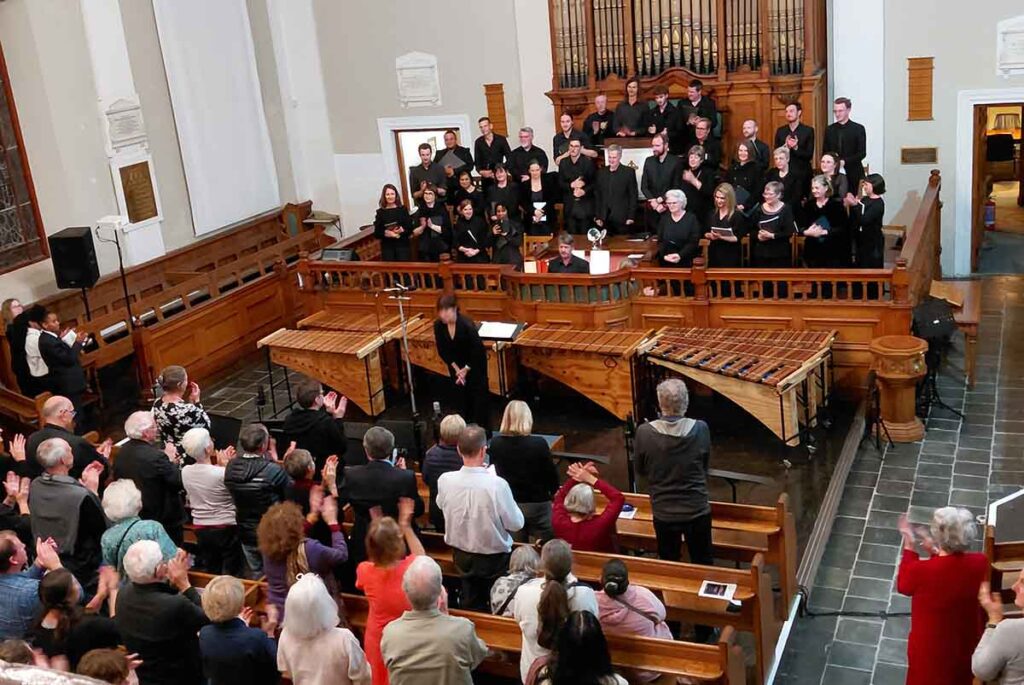
The True Voices performance – 30-odd members sang the 2nd half – was occasionally in need of a bit of acoustic help – despite the reverberance of the hall and the recent removal of carpets, occasionally one wanted more blend in the sound, and sometimes the middle voices did not carry. But beautiful lines and joyful familiarity with the material and the intellectual interest of comparing the new sounds to the soundtrack in one’s head, made for a sweet listening experience. The duet from the “Winter” got the Swingle-singers treatment and it was simply gorgeous.
Texts were provided – it seems they were carefully chosen – but I am afraid I struggled to make out any of the words. I got enough from the programme to summarise the idea, and enjoyed the overall experience.
The first half of the programme was made up of 5 world premieres of South African choral works: a significant and challenging undertaking that is not only much appreciated, but should be shouted from the roof-tops. New music is the only way we stay relevant and do not turn into museum-curators who dust off our most important works every now and then in the hope that audiences would care, or worse, that they “should”.
Chris Chivers, Simon Chapma, Stephen Carletti, David Orr and Grant McLachlan are all involved with the choir in some way – singers, conductors, founder members etc. All five composers contributed sacred songs to the programme, clearly for liturgical use. Some of the music felt a touch out of reach for the resources of the selected 11 members who sang the first half, but all of it was music one would be happy to hear again – in liturgical or concert context. The latter was mostly lost on me, as the concert-format does not allow much time in between pieces to delve into the mysticism of the texts, but as a n ear-pleasing sonic experience, there was much to enjoy. Now that I have read all the poems and studied the programme, I would actually like to hear the concert again, and see what the choir would have done with another week or two.
Community, engagement and inclusivity was underlined by the palate cleanser: A “Vivaldi Medley” by the Somerset College Marimba Band, a delightful bit of fun and a joyful letting off of first-half steam, continuing with some well-known South African favourites as audiences took in a coffee/wine break in the perfect spring air in the garden outside. Concerts at St. Andrews are always a special experience, and this one did not disappoint.
To find out more about True Voices Choral Even Song, see here.
What: True Voices A Season to Sing review
Reviewer: Albert Combrink
WS