SYMPHONY CONCERT. Saturday, 22 November, 2025. At Cape Town City Hall. CPO conducted by Bernhard Gueller, soloist Miclen Laipang; A TRIBUTE TO LOUIS HEYNEMAN; TCHAIKOVSKY: Polonaise, from Eugene Onegin; Violin Concerto in D major, Op 35; Symphony No 5 in E minor, Op 64.
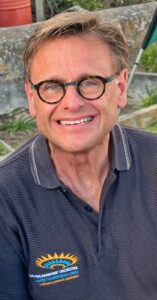
This concert took the form of a tribute to Louis Heyneman, who since his appointment in 2000 has steered the Cape Town Philharmonic Orchestra in his capacity as CEO and (since 2019) also Artistic Director.
He came to the orchestra in its immediate post-natal period, the orchestra having been reborn after the bankruptcy of its predecessor, the ill-fated and ill-advisedly managed Cape Philharmonic, scant years after it had been formed to great acclaim by amalgamating the long-standing CTSO and the CAPAB orchestras. They were dark and uncertain times for the future of orchestral music in this City; the defunct orchestra’s players were owed a great deal and the orchestra’s assets – most importantly, its irreplaceable library of scores and parts – had been attached by its creditors.
A core of committed people banded together at that time, to ensure the continuation of orchestral music: pre-eminent amongst them was Ton Vosloo, who was essentially the driving force behind the creation of a new orchestra and its corporate structures; and also the provider of considerable funds to ensure its future.
He was, of course, not alone in this endeavour, and amongst those who also provided the crucial financing to ensure that the bankrupt orchestra’s assets were available to the new orchestra and that players could be engaged with some degree of surety were the likes of the Ackerman and Rupert families.
Survival of the orchestra
It was accordingly not at all inappropriate that, on this occasion, the opportunity was also taken to acknowledge publicly the contributions of Ton Vosloo and of Wendy Ackerman in ensuring, not only the birth of a new orchestra, but its survival for a quarter of a century.
But – and quite understandably – the focus of the event was Louis Heyneman, who has astutely directed the orchestra’s management through a great many difficult waters in that period and who must feel considerable satisfaction, I would think, in experiencing the excellence of its personnel and playing standards, so well exhibited in this final season of his tenure before retirement.
Outreach into the community
The intervening decades have seen a broadening and strengthening of the CPO’s musical outreach into the community; with the establishment of youth orchestras and ensembles, teaching programmes, school concerts and festive outdoor performances at various venues – indoor and outdoor – which make the orchestra, despite the relatively few formal symphony concerts, a very busy undertaking indeed.
But all of this had to be done whilst perforce navigating the treacherous waters of financial uncertainty and political pressures. In this, Heyneman has proved astute – no doubt assisted in no little measure by the members of the orchestra’s Board – and has helped the orchestra survive several financial crises as well as the sometimes unrealistic transformation demands (particularly in the earlier days), which sought to place appearance above ability.
The orchestra is still not as financially assured as it should be, the main cause being the woeful lack of support from the national Arts Department’s treasury-sourced funds, potentially available funding being diverted in preference to projects having a seemingly more flashy appeal than the rather mundane, long-term commitment to a more localised centre of musical excellence. No doubt identity politics and the lack of control plays a part.
But the orchestra’s demographic transformation is no longer even a matter of comment. The CPO – whilst having never succumbed to tokenism and having always appointed on merit – now displays a satisfyingly healthy representation of the City on its stage; not a few of the current members being the musical fruit of the orchestra’s own youth training programmes.
Appointment of Adriaan Fuchs
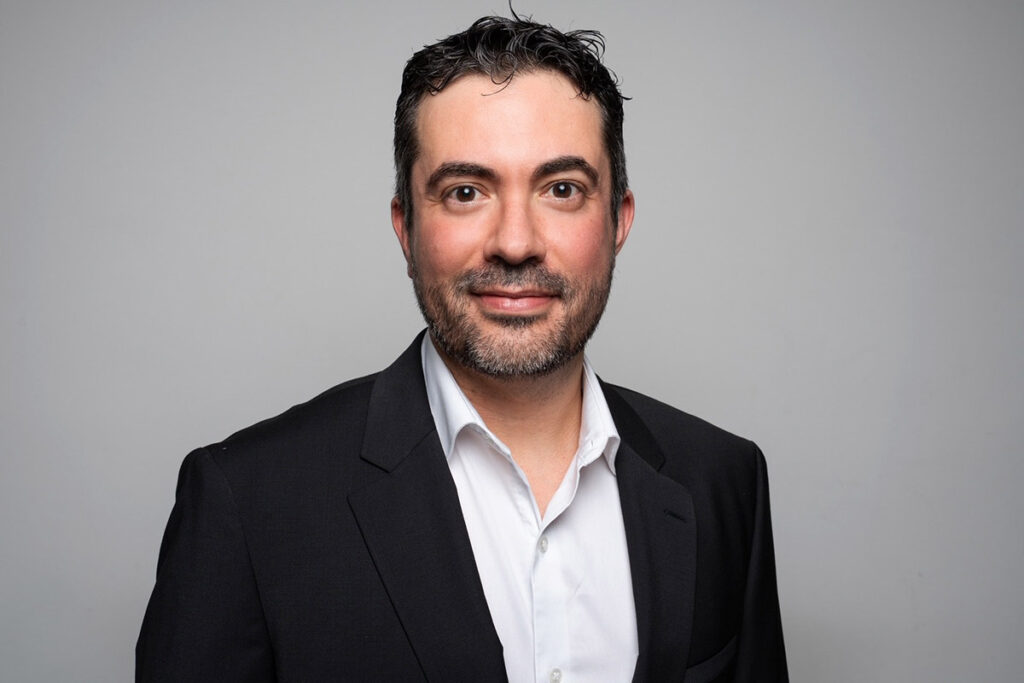
Heyneman will be succeeded by Adriaan Fuchs, whose return to Cape Town from New York’s Carnegie Hall represents a significant appointment. His international experience will be of great value in the coming years; his local background and training will temper some of his ambition with hard realism, the lack of which was so directly responsible for the financial downfall of the previous orchestra.
I stated that Heyneman could take pride in the playing standards of the orchestra in this final concert season of his tenure. That was apparent in the glowing account of the Mahler 5th Symphony some two weeks earlier; and in a towering performance of one of Gueller’s signature pieces – the Brahms 1st Symphony – just a week earlier.
On this occasion it was an all-Tchaikovsky programme, another composer for the music of whom Gueller displays considerable affinity. Indeed, this attribute tells one a great deal concerning Gueller’s own musical status, since he is undoubtedly a Classicist at heart, respecting as much the formal structural elements of – particularly – the great symphonic works of the 19th century, as delighting in their melodic and harmonic import.
And yet the generally far more emotionally infused writing of Tchaikovsky seems also to bring out the best in Gueller, attesting perhaps to a far more emotional musical soul than his often reserved external manner would suggest.

On this occasion, having whipped the orchestra through a heady performance of the glittering Onegin Polonaise – irresistibly infectious music which has the Romanov imprimatur stamped all over it – he was joined by visiting violinist, Miclen Laipang for a performance of the same composer’s celebrated Violin Concerto in D major.
This was a wonderful account of a concerto which – being African – I rate as one of the Big Five. Laipang – playing a sweet-toned 1707 Stradivarius – is a compelling soloist both to hear and to watch. As frequent readers will know, I have a certain distaste for excessive display by instrumentalists; in general, I prefer the emotion to be found in the actual music recreated, rather than in excessive physical movements mimicking such.
Laipang is certainly not a restrained performer: and yet, in his case, the movements are so inherently organic to the actual process of creating the tone that they never assumes the status of the merely showy or affected. Indeed, the very sound that emanates from each bowed string appears to have its source in the sole of a foot: his entire body seemingly coiling energy into a bowing arm of infinitely precise dynamic gradation.
The left hand, in contrast, floats with an apparent weightlessness over the strings and conjures intervals and chords of intonational fidelity. One has the idea that Laipang relishes performing this work: certainly, he approached it with an assurance that spoke of a respectful familiarity and his employment of tempi alterations and rubato further testified to a experiential personalization.
This did not make Gueller’s task in accompaniment any easier; but – unlike with the previous the week’s Beethoven 4th, in which the pianistic vagaries did occasion some breakdown in taut ensemble – Laipang’s musical solutions were sufficiently organic for Gueller to become attuned to them and the orchestral accompaniment was pleasingly with the soloist in consequence.
This was a deal easier, of course, in the quite glorious account of the central Canzonetta, an idyll of unrestrained beauty. But the outer movements were equally taut: an opening allegro which, without careful handling, can sound somewhat episodic; and the exhilarating finale, taken at an almost reckless tempo by the mercurial soloist and plunged into by an orchestra in joyous pursuit. A wonderful performance.
The concert concluded with my least favourite Tchaikovsky symphony (based on an entirely personal dislike of the rather insidious theme). I mention this because my delight in this performance was occasioned, despite that factor.
And it was a splendid reading. This was a performance in which Gueller could cast aside his Brahmsian Classicism – or even Mahler introspection and Angst – and give unrestrained effect to a love of orchestral colour and effect.
Kudos to Shannon Thebus for the celebrated horn solo of the second movement (and to the succeeding oboe solo of Lisa White); but, in truth, orchestral playing was excellent throughout and – if there were to be a player of the match – I would have given the award to the collected body of strings, who were quite marvellous throughout.
I take the opportunity of wishing my regular readers – as may be appropriate – a very Merry Christmas and a Happy New Year.
What: CPO Tribute to Louis Heyneman
Reviewer: Deon Irish
WS