VIVALDI IN DANCE – AN EMOTIVE MEETING OF MUSIC AND MOVEMENT. Producers: Figure of 8 Dance Theatre and Stellenbosch International Chamber Music Festival. Director: Grant van Ster. Choreography: Grant van Ster and Shaun Oelf (FO8), in collaboration with the cast. Set and costume design: Figure of 8 Dance Theatre. Lighting design: Nell van der Merwe. Producer and production manager: Marie Vogts-Pretorius. Starring: Daniel Rowland and Shaun Oelf. Performers: Damian Jacobs, Irshaad Essack, Jenna Wilkinson, Kirsten Messias, Liam Frantz, Lukhanyo Anta, Marang Gwatyu, Natasha Tsanwani, Sasha Nkonyana and Thalia Alberts. Orchestra: SICMF Camerata. Music: Vivaldi’s The Four Seasons, recomposed by Max Richter. At The Baxter Flipside. DEBBIE HATHWAY reviews.
Figure of 8 Dance Theatre and the Stellenbosch International Chamber Music Festival have taken a collaboration that began in the smallest of spaces and transformed it into an extraordinary theatrical experience.
At times during Vivaldi in Dance, you could barely hear the audience breathe. Then came the bursts of energy, humour and exhilarating movement that made this one of the most exciting collaborations I’ve seen on a Cape Town stage in some time.
A year in the making, the production brings together Figure of 8 Dance Theatre (FO8DT), internationally acclaimed Dutch/English violinist Daniel Rowland and the 17-piece Stellenbosch International Chamber Music Festival (SICMF) Camerata, performing Max Richter’s recomposition of Vivaldi’s The Four Seasons.


A strong chemistry
The collaboration began at the 2025 SICMF, where dancers had to make do with tiny spaces to move. Even within those constraints, the connection with the musicians was strong enough to inspire a much bigger production.
FO8DT co-founder and director Grant van Ster recalls that the chemistry was so strong they knew they had to explore it further. The result is this full-length production, with plans already in place to take the collaboration to the Stift Festival in the Netherlands in 2027.
A stage floor to call their own
What a difference a year makes. At the Baxter Flipside, the dancers finally have a stage floor to call their own, although sharing it with 17 musicians and Rowland in such an intimate theatre presents its own challenges.
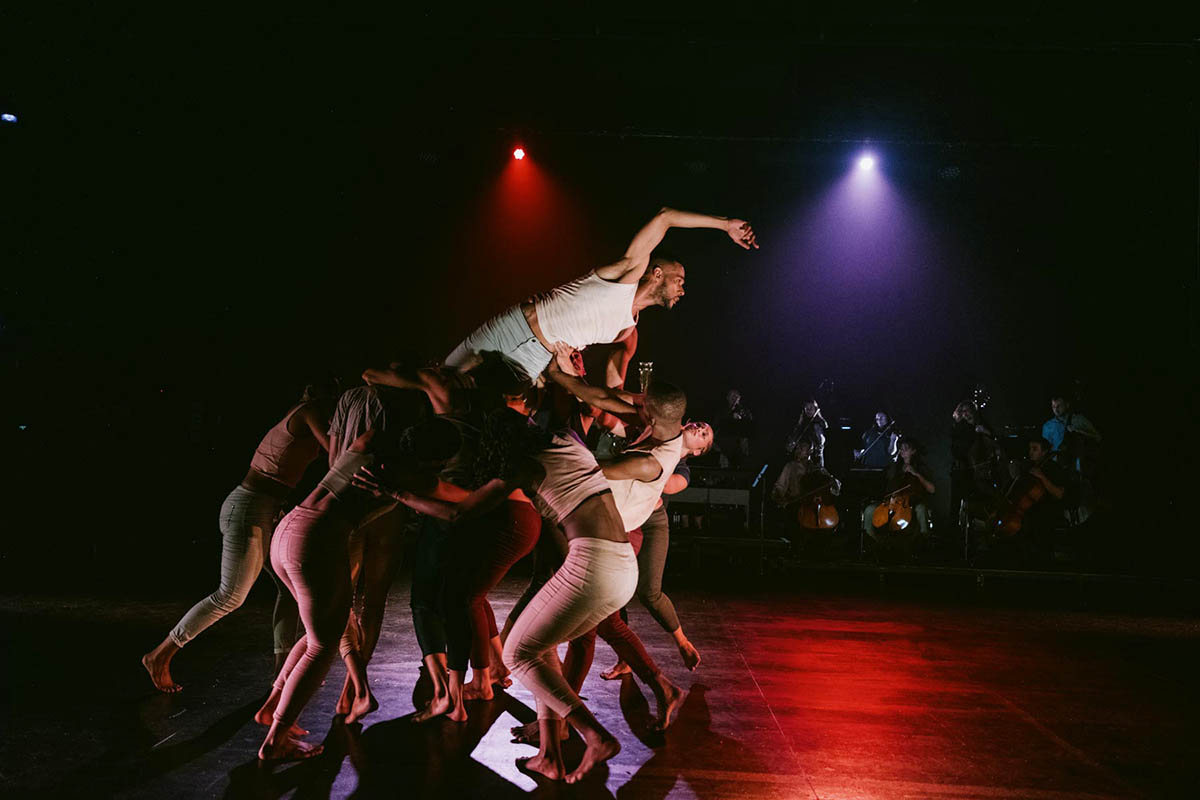
The Camerata occupies raised platforms at the rear of the performance space, leaving the central floor open for the choreography. Small sections of these platforms also become part of the dancers’ territory, allowing them to step up, pause, breathe and return to the action below.
It cleverly uses limited space, giving the choreography different levels and creating moments of stillness that are every bit as compelling as the more frenzied passages.

Extraordinary interaction
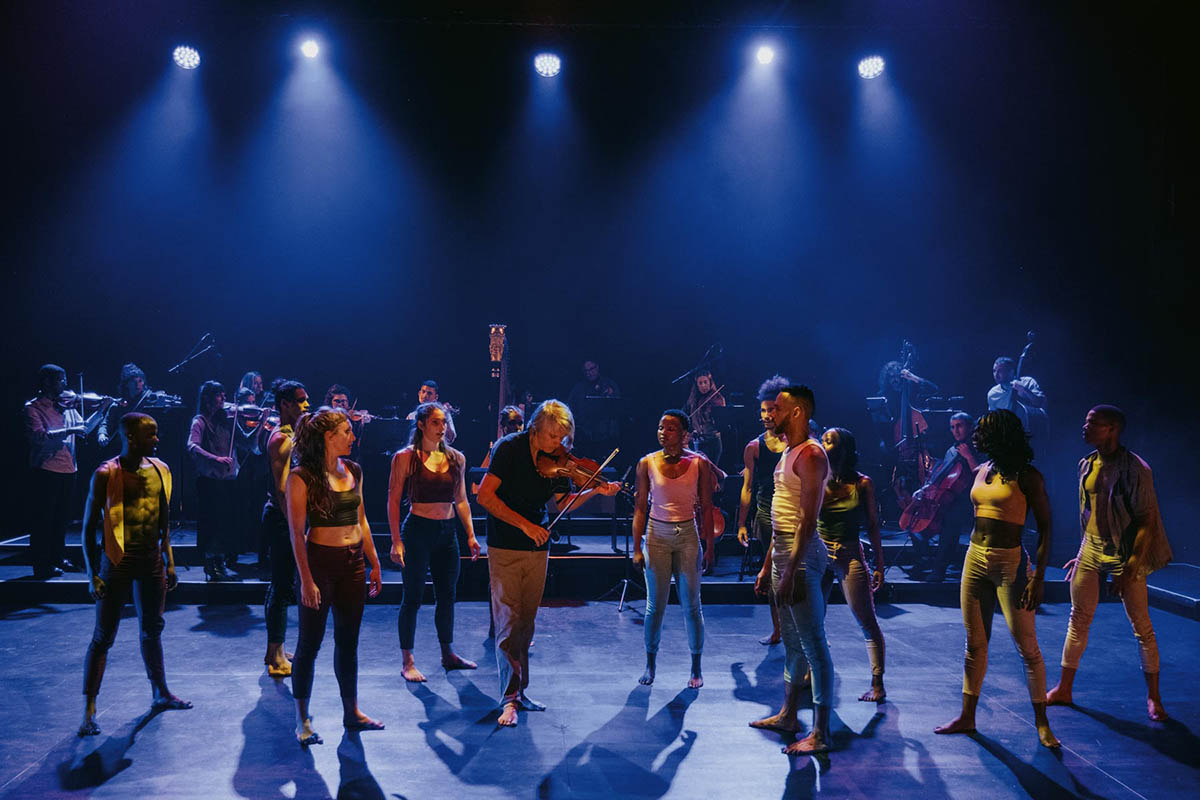
And then there’s Rowland. Barefoot, astonishingly agile and completely absorbed in the music, he is far more than a soloist accompanying a dance performance. He becomes another performer in the choreography, moving among the dancers with his violin, responding to their energy and, at times, contributing to the humour.
The interaction is extraordinary. The dancers are constantly aware of his presence, respect the space he needs to play, and protect his instrument without letting those considerations inhibit the choreography. Their exchanges have a wonderful spontaneity, even though the required precision must be considerable.
Rowland’s musicianship is exceptional, but his contribution is particularly memorable for his willingness to surrender the conventional distance between musician and dancer. He is as much a part of the action as anyone else.
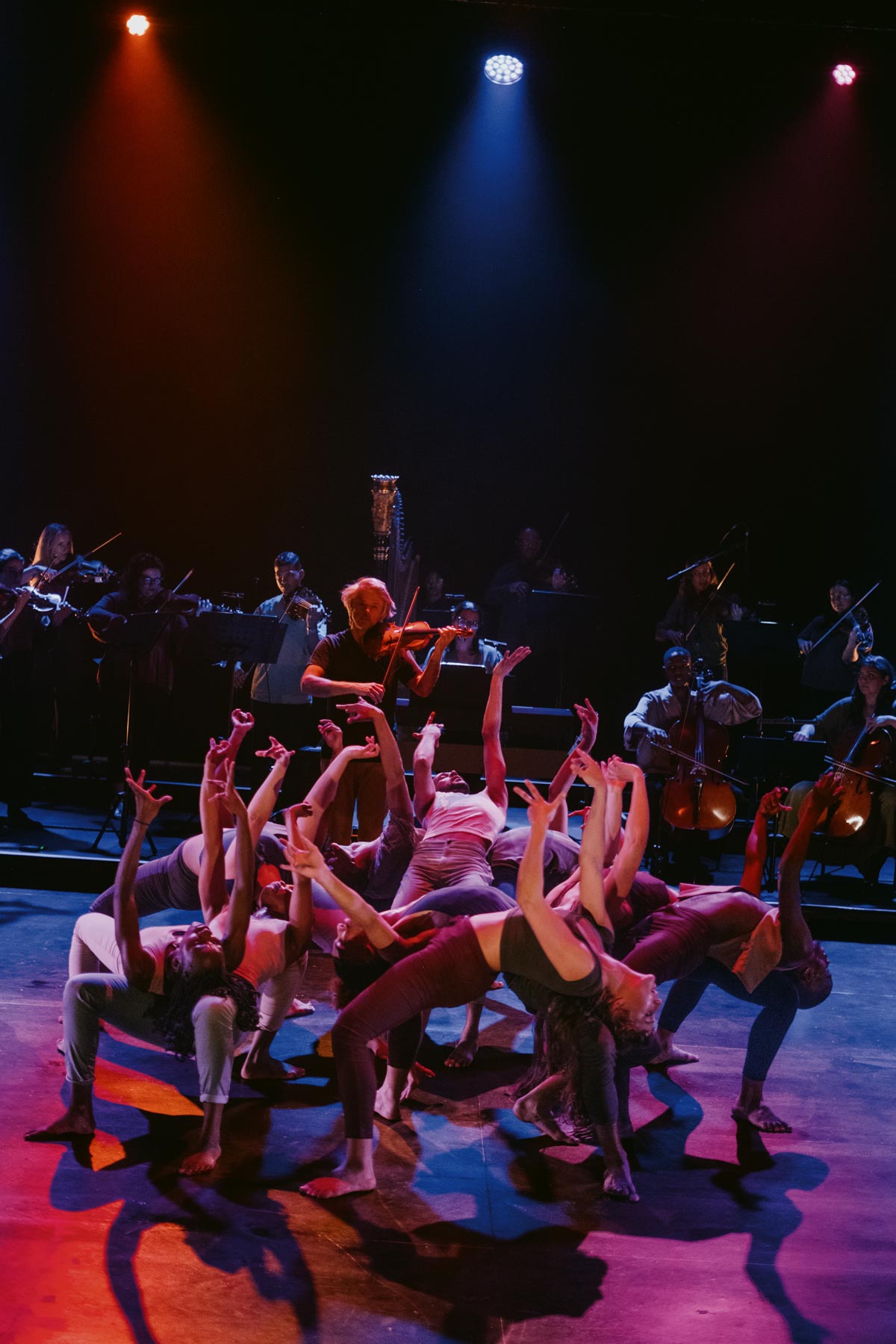
Under Grant van Ster’s direction, with choreography by Van Ster and Shaun Oelf in collaboration with the cast, Vivaldi in Dance moves effortlessly between extremes. At times the movement is almost frantic, the dancers propelled by Richter’s driving rhythms. At others, everything slows, bodies settle and the stage seems suspended in time.
The quieter passages are particularly affecting. At times, the entire audience absolutely still, unwilling to disturb what was unfolding before them. Occasional flashes of humour provide welcome relief but never undermine the more serious themes. The production reflects on humanity’s relationship with the natural world, its beauty, fragility, destruction, and enduring hope, without forcing a literal interpretation of the music.
Contemporary treatment of Vivaldi
Richter’s contemporary treatment of Vivaldi provides a magnificent foundation for this approach. Familiar musical phrases emerge and disappear, while repetitive passages build tension and allow the dancers to explore the music physically rather than simply illustrate it.
Shaun Oelf, as usual, is a delight. When music genuinely moves him, his performance takes on another dimension. Here, he responds instinctively to the score with the strength, sensitivity and expressive freedom that distinguish his work.
The ensemble of dancers brings tremendous physical energy and concentration to a demanding performance. The cast’s inclusion of first- and second-year trainees from FO8DT’s Performance Development Programme makes their achievement even more impressive.

It is worth remembering how little time performing artists often have to bring productions of this nature together. Two days on stage can be a luxury, especially when dancers and musicians juggle rehearsals and commitments to other projects.
Integrating 11 dancers with a 17-piece ensemble and a violinist of Rowland’s calibre, whose movement must be carefully accommodated within the choreography, requires considerable trust, discipline, and quick thinking. The pressure must be enormous.
On stage, you would never guess how little rehearsal time they’d had. The dancers and musicians worked together with remarkable ease, each responding to the other as the performance unfolded.
Full credit must also go to lighting designer Nell van der Merwe, whose work helped define the different levels and moods within the compact performance space.
The audience response said it all. Everyone clearly felt they had witnessed something special, and the enthusiasm at the end was overwhelming.
What began as a relatively small experiment in Stellenbosch has developed into a collaboration with genuine international potential. The invitation to perform at the Stift Music Festival 2027 in the Netherlands is richly deserved.
If these artists can achieve this with so little preparation time and so little space, imagine what might be possible as their partnership develops.
Absolutely brilliant.
What: Vivaldi in Dance
Where and when: Baxter Flipside Theatre, Cape Town, 28–31 October 2026
Times: 7.30pm, with additional 3.30pm matinees on 30 and 31 October
Tickets: R180–R250 via Webtickets
Photos: Lindsey Appolis
WS