Nwabisa Plaatjie, FDC nominee for Best New Director, playwright, performer and director gives beautiful answers to the deep questions posed to her by Weekend Special’s Megan Furniss, and does it all just as 23 Years, a Month and 7 Days opens at The Flipside at the Baxter.
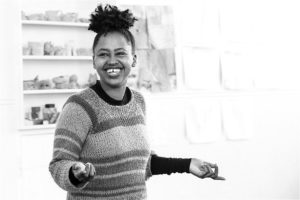
WeekendSpecial: Tell me three things about you?
Nwabisa Plaatjie: I’m an introvert and can be very awkward around people. But at the same time, I also like people a lot. And contradictions. I love contradictions. And… what else? Oh. Seven is my favourite number.
WS: Why theatre?
NP: Drama class was the first place where I felt recognised. Arts. And Culture.
With maths you put in a lot of effort and you feel … In drama class I could see the results of my efforts, I felt recognised, and in a way that surprised me. I felt comfortable in that space and wanted to remain there. Jacqui Singer prompted the move from acting to theatre making. She said she could see me as an actor, so why not try something else? For the first few years I called myself an actor in a theatre making class. Then, in my final year, my peers were talking about the theatre I make, saying positive things. I listened.
WS: What is your process with making theatre?
NP: I write a lot. I collect stories and jot down experiences. There’s an idea. And then there’s discomfort. (Have I mentioned how much I love contradictions?) What follows is a journey to engage with, address and sometimes solve the discomfort. And to get others to join me in finding the human experience of the idea, the somethings that are universal to everyone; pain, poverty, inspiration, self improvement, societal influences.
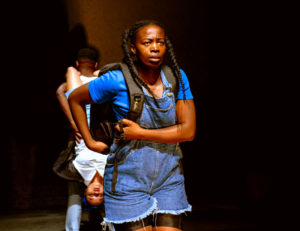
With 23 Years the “idea” started quite open, but it was shaped into a particular experience soon after we started #RhodesMustFall and #FeesMustFall at UCT.
I joined Magnet Theatre for a year-long internship and the brilliant opportunity to create a new theatre piece without worrying about rent money. I could explore without worrying about failure or how to impress. We had ten months and I felt like I was given a second chance. All the things ‘lost on me’ in my first year, when we were awkward, getting used to a new environment, more concerned with making an impression than with learning. During the year at Magnet I could reflect on what was gained and what was lost.
The year at Magnet gave me the opportunity to get lost in the process. I was on the floor with the acting trainees and we were getting lost together. And still, when I’m stuck in my theatre making process, I ask my actor friends.
WS: What is your personal vision for your future?
NP: All along I was told that – my parents, and my friends told me – that “art is a hobby, not a career”. That I should find a job and do art on the side. But at Drama school, creating work, and also at Magnet, it felt like a 9 to 5 job, and one that I was getting paid for (at Magnet). That transformed me. I realised that here was a muscle that I am training and developing, I was on the floor, working on my craft, daily. I should be allowed to do this and earn money. So my goal: finding and sustaining my entrepreneurial capacity as an artist.
WS: What’s your greatest challenge?
NP: To find and sustain that entrepreneurial capacity, on a daily basis!
One practical challenge with this goal is to find a space, and then share it with fellow artists, for “search, trial and error”. One that allows you to create a product to a certain degree of clarity, to successfully communicate it to potential funders, festivals, “employers”.
WS: What or who is your inspiration?
NP: I always reference back to my grandmother and how she worked “smartly”. She was a vendor, sold fruit in the streets, cleaned houses on Thursdays and travelled to Durban at month-end to buy stock. On weekends she would sew. She knew how to diversify her income streams. She had entrepreneurial spirit.
We still tend to think actress-waitress, rather than actress-voice-artist-teacher-facilitator. I learned early that not getting it (the job) does not mean it doesn’t exist or it is not available.

WS: Tell me anything you want to about 23 Years a Month and 7 days …
NP: It’s fabulous and I love it and everyone should come and see it!
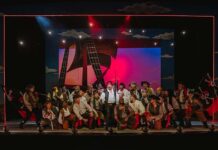
I like that it is contemporary, relevant and multi-disciplinary. There’s a clear narrative, but it also has visual and musical elements that will please a wide audience.
WS: So, transitioning from fringe/student to Baxter? Any observations
NP: I have been at my day job – as coordinator for Masambe at the Baxter – for 10 weeks now; so it is still early days, working within the professional theatre environment. The question we need to ask ourselves as we step out of drama school and into this professional space is “How do I get to the same committed state of mind?” And the answer is by setting your own assignments, controlling your own learning. That passion alone is no longer enough and that we need to collect the tools necessary to sustain ourselves in the industry, networks being one of them.
The cool thing is that we’re still young artists and can test out things; we don’t have to perfect any language, but respect it by not compromising on quality. Or effort.
WS: The title 23 Years a Month and 7 days is mouthful. What’s the title or do we have to see the play to understand?
NP: I was 23 at the time of writing the play, we had a month to rehearse and 7 is my favourite number. It was a working title that stuck because of its relevance to the process, to the theme and the content, some of which is indeed biographical.
What: 23 Years, A Month and 7 Days
Where and when: Baxter Theatre Flipside from 13 to 24 March 2018
Book: Webtickets on 086 111 0005
WS