 Acclaimed staging of such diverse productions as Master Class and Tosca attests to an astonishing versatility, one of several merits characterising CTO’s present artistic director, Magdalene Minnaar (pictured left), as BEVERLEY BROMMERT finds out:
In the glowing aftermath of Tosca’s recent reception at the Joburg Theatre in Gauteng, Minnaar relishes recalling the exceptional impact this opera made on its audiences: “On opening night, an extended ovation interrupted the exquisite rendition of Tosca’s aria “Vissi d’ arte…” in Act 2, which is most unusual in the middle of a performance.
“We had packed houses for every show, with standing ovations at the end of each one, and roses thrown onto the stage. We opted for old-fashioned charm in bringing back paging for the curtain calls (as opposed to today’s practice of the full cast taking a collective bow.” She notes with delight that since CTO’s last visit to Gauteng with Le nozzie di Figaro, audience attendance there has doubled. “I’ve learnt through verbal reaction and social media that for many, this was a first-ever experience of opera, and that bodes well for the future of this art in South Africa. The audience potential is enormous up north, as their population is double that of Cape Town.”
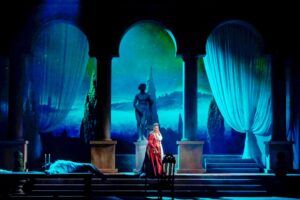
Unlike many a contemporary staging of well known operas, in which elements of surprise are introduced to freshen the predictability of hoary masterpieces, Minnaar has chosen to evoke with precision the period of Tosca’s setting (circa 1800, the Napoleonic age): “The socio-political climate of the time, with its power-shifts post the French Revolution, is so integrated into Puccini’s opera that it cannot be ignored by updating the work. In any case, Puccini himself back-dated it – he was born nearly three generations after 1800, and Tosca premiered in 1900 – so it is legitimate to respect the initial creative team of composer and librettist. With relatively few operas a year in this country, it’s not necessary to do something radical in order to grab attention amid a plethora of productions.”
Rise and rise of opera
Ever aware of the need for economy in mounting a large-scale, lavish production like this, Minnaar has availed of existing sets, costumes and props from the era of Angelo Gobbato, though not at the expense of quality. An impressive injection into CTO’s wardrobe department from the former PACT, thanks to Minnaar’s northern network (she was originally Gauteng-based) will ensure visual splendour on future productions.
Borrowing from the past does not preclude innovation, however, and the lighting design for this traditionally staged Tosca is modern, unconventional, and intensely dramatic. The dénouement, for instance, is rendered even more startling through lighting effects, as is confirmed by total silence from the shocked spectators before they erupt into tumultuous applause at the final curtain.
As for interpreting the personae, Minnaar prides herself on fleshing out as fully as possible every character into a credible being with what she terms “a before-story and an after-story”. This applies as much to a humble jailer as to leads like Tosca and Scarpia, and is key to engaging an audience.
If any further instances of this director’s versatility were required after a reprise of Master Class at Theatre on the Bay in the wake of Tosca, she will soon take her place among the judges of the 2023 Operalia. This prestigious event will be held on African soil for the first time, with (another first) a South African adjudicator.
One more step in the rise and rise of opera at the tip of Africa.
What: Magdalene Minnaar on Tosca
Where and when: Artscape Opera House from 12 to 17 September 2023
Tickets: Computicket and 021 421 7695
WS