DEON IRISH reviews
Two concerts by the Cape Town Philharmonic Orchestra at The City Hall in successive weeks called to mind Dickens. Even if neither was the worst of concerts, nor the best of concerts, so as to demand superlative degrees of comparison, one undoubtedly disappointed and the other proved a hugely enjoyable event.
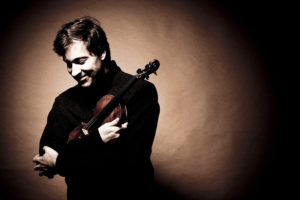
The first on 15 June, conducted by Bernhard Gueller, consisted of: Liadov’s tone poem, Baba Yaga, Op 56; Brahms’ Violin Concerto in D, Op 77; and Rachmaninov’s Symphony No 1 in D minor, Op 13. The soloist was the French violinist, Philippe Graffin.
This concerto is my personal favourite of the genre. However, this reading by the soloist was so spiritless, so insecure, so deficient of tonal projection or intensity, and so marred by repetitive fingering errors – particularly the multi-stopping – that, despite the best efforts of orchestra and conductor, it is kindest to say nothing further about it.
Vivid orchestral depiction
I enjoyed the spirited reading of Liadov’s vivid orchestral depiction of the Russian witch who lives in a hut mounted on chicken legs, surmounted by a cock’s comb. Perhaps something for the Nando’s or KFC marketing people to work with.
Rachmaninov’s first symphony was very poorly received at its first performance and put the composer into a prolonged and debilitating depression and the work was not again performed in his lifetime. The version we hear nowadays was reconstructed after the composer’s death from surviving orchestral parts. The symphony has attained some popularity, but it must be conceded that the original criticisms cannot wholly be attributed to Glazunov’s appalling conducting.
One of the problems is perhaps the choice of Russian Orthodox liturgical themes as material. The composer had an abiding fascination with liturgical music and wrote many fine works for the Church. In this case, however, the themes employed tend to be too fragmented to sustain the lengthy arguments required in the symphonic form and result at times in a feeling of triteness. The relative lack of architecture also gives rise to a tendency to ramble.
That being said, Gueller clearly admires the work and conducted it with heartfelt involvement, achieving considerable success in consequence. The scherzo-like second movement was particularly gratifying, strings delivering the delicate writing with assured grace.
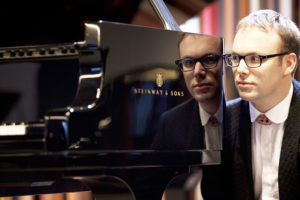
The second of these concerts was that of 22 June. It featured: Gershwin’s “American in Paris” and Piano Concerto in F; Barber’s Adagio for Strings; and Bernstein’s Symphonic Dances from “West Side Story”. Bernhard Gueller conducted and the soloist was Liebrecht Vanbeckevoort.
This was a very different musical matter. Firstly, the soloist proved to be a distinguished instrumentalist who embraced the jazz-infused charms of the Gershwin concerto with a lovely sense of style, engendering the requisite sense of enjoyment. Then, too, the purely orchestral works on offer are all showpieces of the symphonic repertoire – both the “American in Paris” and the Symphonic Dances requiring extensive orchestras (including four saxophonists and five percussionists, in the case of the latter.)
To start with the orchestral pieces, both Gueller and the players can give themselves hearty pats on the back for works that were delivered with fluent accuracy and marvellous immediacy. Not even the somewhat unbalanced string disposition (basses were in unanticipated short supply) really marred the overall impact.
Evocative tone poem
“American in Paris” is a wonderfully evocative tone poem, capturing the sights, sounds and atmosphere of pre-Depression Paris. The work was premiered in December 1928 and was undoubtedly inspired by the composer’s journey of exploration to the eponymous city earlier that year.
Gueller captured the jazzy, buzzy excitement of the city with suitably Yankee enthusiasm; but I was slightly less convinced by the jazz elements. A slightly more laid back account of the famous blues trumpet theme might better have captured the melancholia.
Gershwin’s concerto of three years earlier is a lovely cross-over bit of writing, fully infused with Gershwin’s stage music background and experiences, but in structure and intent wholly at ease in the company of more formally conceived concertos.
Vanbeckevoort evidently learnt the work in less than a month for this performance, which makes the apparently relaxed ease with which he tossed off its many technical difficulties the more noteworthy. My only cavil at this lovely account was the suitably punchy, but somewhat too overbearing brass presence in the opening movement.
The brass, of course, had a field day in Bernstein’s glorious suite from “West Side Story”. The work is not structurally significant – essentially a collection of dance movements contrived from episodes in the celebrated musical. (How about Cape Town Opera doing that, instead of the banal Showboats and Tiger Bay’s?)
But – like Tchaikovsky, or Mahler, or Rachmaninov before him – Bernstein was a great conductor, which seems to have informed his compositions with a superior orchestrational ability. This suite is a non-stop exploration of texture and colour, rhythm and lyricism and received a wholly rewarding reading.
Who: Cape Town Philharmonic Orchestra – CPO
Where: The City Hall, Cape Town
WS