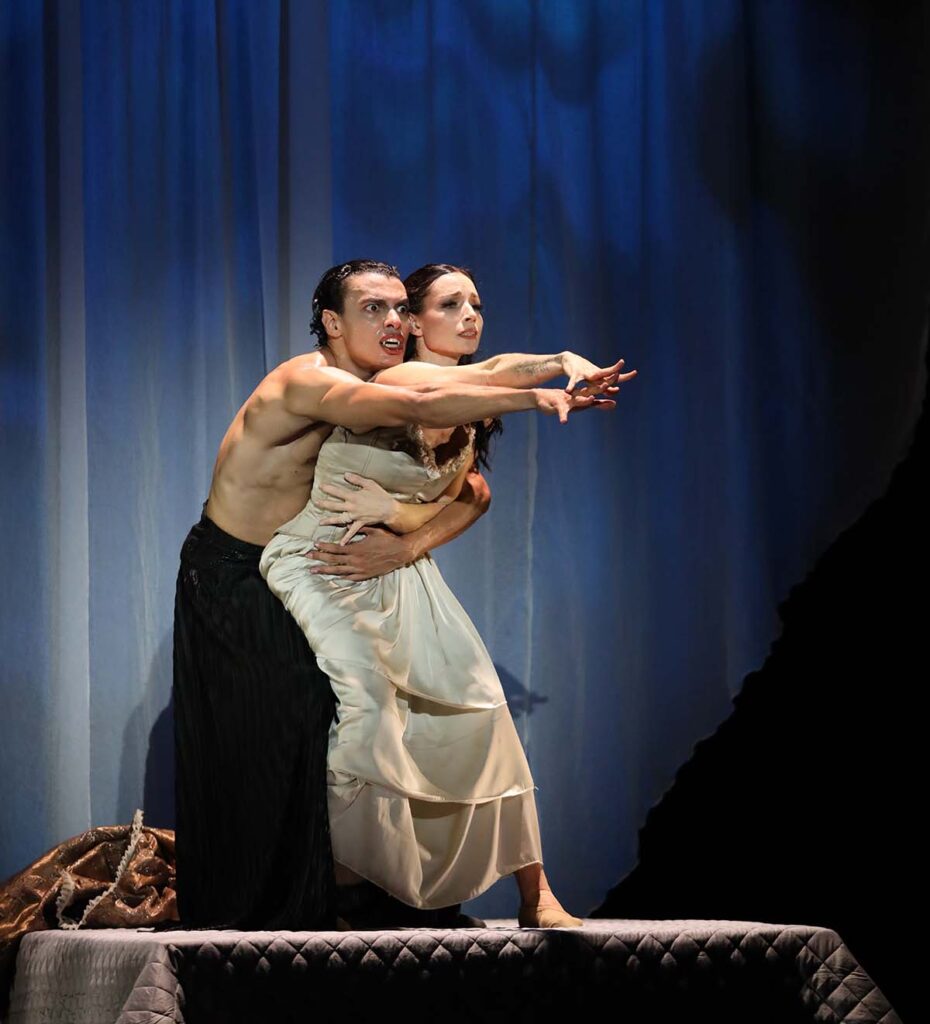
DRACULA. Presented by Cape Town City Ballet. Choreography, direction, set and costume design: David Nixon CBE. Castle design: Chris Dudgeon. Lighting design: Faheem Bardien. Music: Alfred Schnittke, Sergei Rachmaninov, Arvo Pärt and Michael Daugherty. South African costumes: Donovan Mowatt. Photographs: Brenda Veldtman. At Artscape Theatre. DEBBIE HATHWAY reviews.
I rarely resort to flowery language, but Cape Town City Ballet’s Dracula had me reaching for a thesaurus after its opening night at Artscape.
I had heard that David Nixon CBE’s production was exceptional, but nothing quite prepared me for it. In all my years of reviewing dance, I have seldom been so engrossed in a ballet or seen classical dancers inhabit their characters with such convincing dramatic intensity. From the opening moments to the shockingly brutal conclusion, the performance held my attention.
This is not the sort of ballet where you occasionally drift off during a musical passage or wait for the next spectacular variation. The action never loses its grip and, at times, is genuinely frightening.


Bram Stoker’s Gothic novel
Based on Bram Stoker’s 1897 Gothic novel, Nixon’s Dracula follows the young solicitor Jonathan Harker to Transylvania, where his encounter with the mysterious Count triggers a series of terrifying events. Dracula then travels to England, preying on Lucy Westenra and fuelling his obsession with Harker’s wife, Mina.
The ballet retains the novel’s central characters and themes of seduction, fixation, fear and the supernatural, although Nixon takes liberties with the narrative, particularly in developing the attraction between Dracula and Mina. His interpretation gives their relationship romantic and psychological complexity, expressed through the choreography.
And what choreography! Nixon demands considerable physical strength and control from the dancers. The partnering is exceptionally challenging, with lifts executed at unexpected angles and configurations. Some appear to defy gravity, yet they are performed with such assurance that the sheer difficulty is almost easy to overlook.
Extraordinary pas de deux
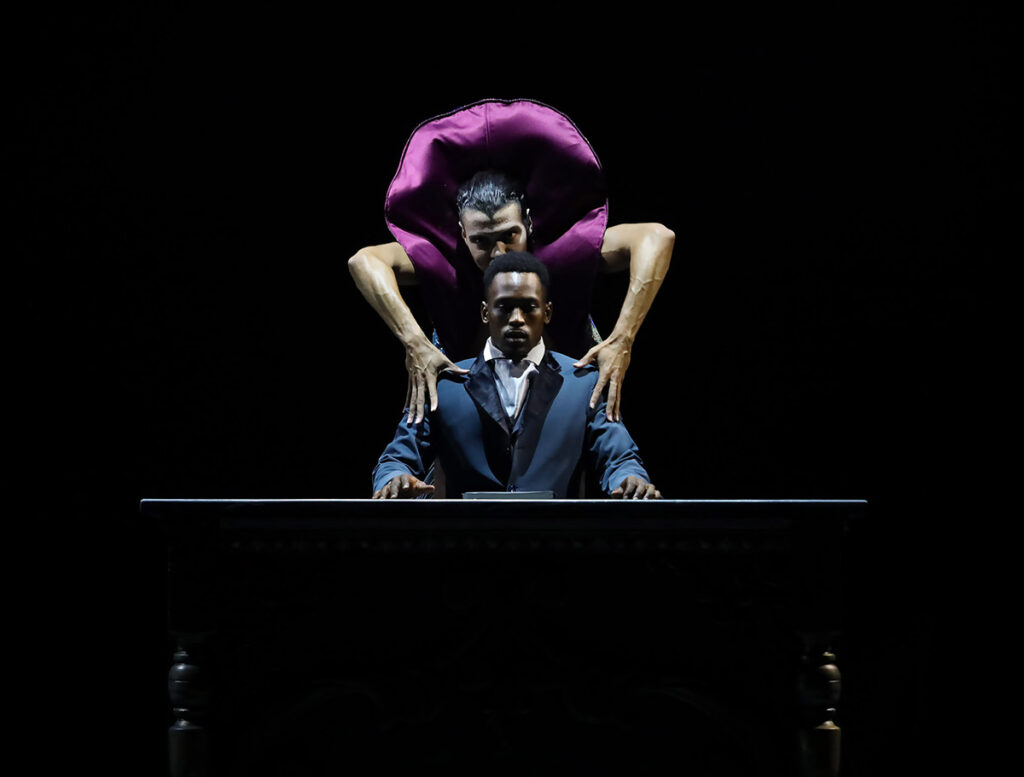
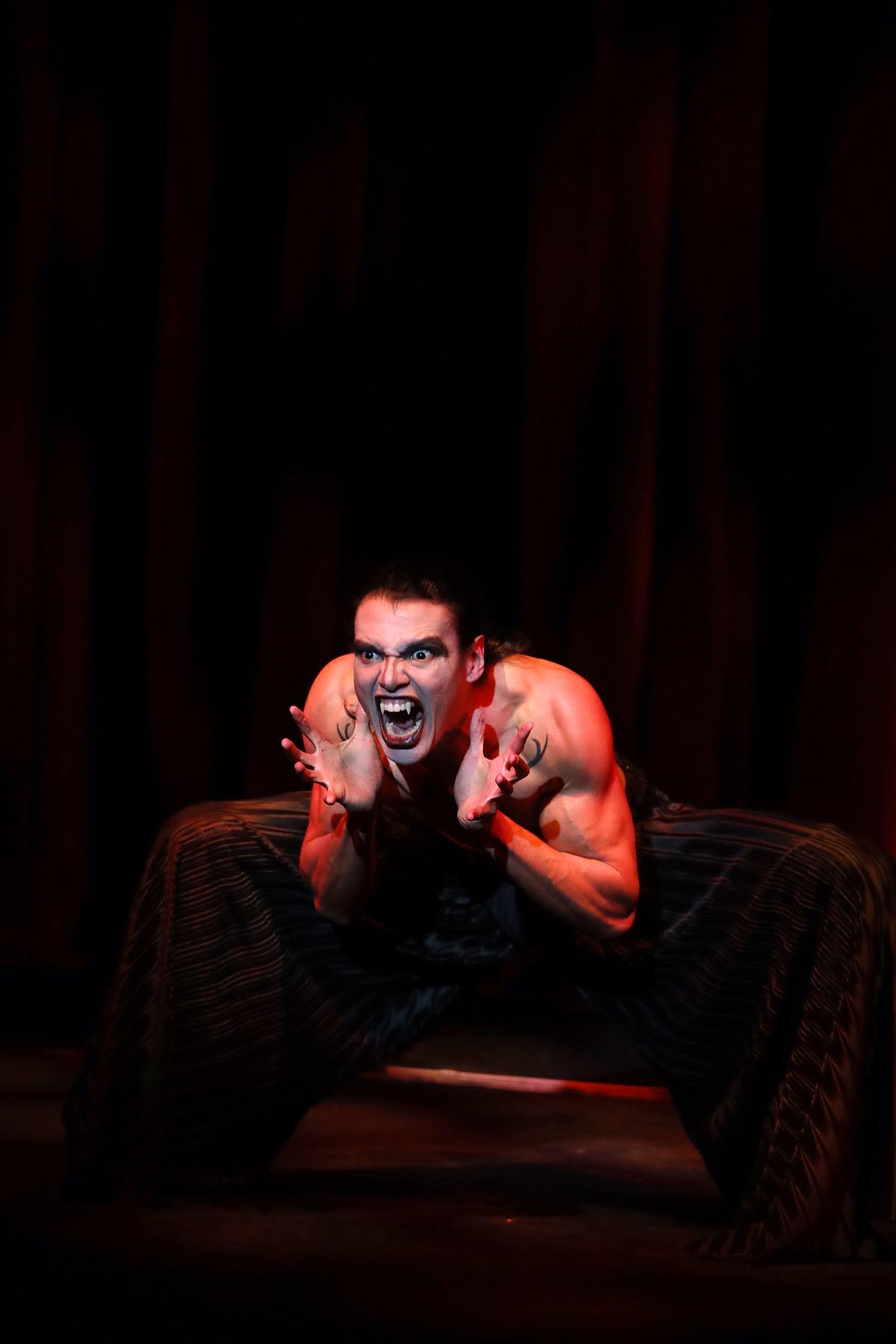
Oleksii Ishchenko, originally from Kyiv, Ukraine, commands the title role. His experience in classical dance, contemporary performance, acrobatics and aerial work suits the role perfectly. He is predatory and strangely compelling, whether stalking his victims or appearing almost within the audience’s reach.
Sasha Barnes is outstanding as Mina. The Cape Town-born dancer, who joined CTCB in 2024, demonstrates maturity in her dramatic interpretation.
Their romantic pas de deux is extraordinary. I was completely absorbed by every gesture, lift and exchange that revealed something about their attraction. The physical intimacy, tension and vulnerability are captivating.
It raises an interesting question about why dancers can be so much more engaging in a work such as this than in some of the traditional classics. Perhaps the characters and their emotions are more immediately accessible, or the choreography gives performers greater freedom to explore their dramatic instincts. Whatever the reason, their commitment makes the relationships and emotional conflicts believable.
Genevieve Magua makes a striking Lucy, while Fanelo Ndweni brings conviction to Harker. Gil Zuntini, as Arthur Holmwood, stands out for his clean turns, soft landings, beautifully pointed feet and exceptional control. Likhaya Loyiti plays Dr Jack Seward, while Lihle Mfene brings a strong presence as Van Helsing.
Luke Wragg, as Dracula’s disturbed disciple Renfield, spends much of this performance confined to a cage that rises and disappears through the stage floor near the front row. His frantic movements, whether inside the cage or briefly released, are unsettling.
The cast shows no noticeable drop in standard, technically or dramatically. Their collective energy never falters.
The ballroom scene is another highlight, with an elegant waltz gradually giving way to unease as Lucy’s increasingly strange behaviour attracts attention. Chris Dudgeon’s castle design is remarkable, especially when Dracula scales its walls with such speed and agility. The vertical staging, along with Renfield’s cage rising and descending through the floor, adds another dimension. At times, the performers are almost within touching distance, bringing the horror unnervingly close to the audience.
Faheem Bardien’s lighting emphasises the scale of the castle and makes the graveyard scenes even more chilling. The period costumes are exquisite, their elegance contrasting with the darkness of Dracula’s world.

The recorded score, drawing on compositions by Alfred Schnittke, Sergei Rachmaninov, Arvo Pärt and Michael Daugherty, sustains the tension without overwhelming the action. Its mood shifts follow the drama closely, from intimacy to outright horror.
Then comes the ending. Fast, savage and almost shockingly unexpected, it prompted audible gasps from the audience. After two acts of mounting tension, Nixon gives us barely a moment to register what is happening before it is over.
CTCB first presented this production in March 2026 and returned for a limited Halloween season after its earlier success. Having seen it, I understand why audiences wanted another opportunity.
Classical technique at this level is impressive enough, but the dancers’ dramatic conviction makes you forget about technique altogether. Nixon’s Dracula challenges expectations of what ballet can achieve as theatre, and Cape Town City Ballet meets those demands with confidence. As Nixon puts it, “I hope you leave haunted, moved and perhaps seeing the darkness – and the light – a little differently.”
What: CTCB Dracula review
Where, when: Artscape Theatre, Cape Town, 28 October–1 November 2026
Time: 7.30pm, 30–31 October, 2pm 31 October; noon and 4pm 1 November. Sold out, but for a few tickets left for the final performance.
Tickets: R250–R500 via Webtickets or Artscape Dial-A-Seat on 021 421 7695. No children under 13. Check the foyer lightboxes for casting details on the day
WS