The acclaimed and multi-award-winning designer and director Jaco Bouwer tackles one of the Baxter Theatre Centre’s flagship productions for 2017 – Peter Weiss’s contemporary classic Marat/Sade – in the Baxter Flipside.
Bouwer has assembled a stellar cast and creative team to bring to life this powerful and vital play. In recent years at the Baxter he directed the award-winning productions Samsa-masjien, Rooiland and Santa Gamka.
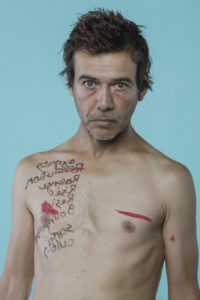
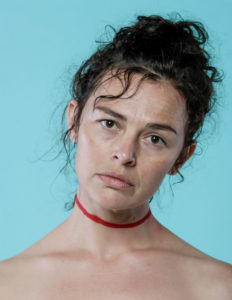
The extraordinary ensemble of 16 actors is led by Mncedisi Shabangu (The Inconvenience of Wings) as the Marquis de Sade, Charlton George (Rooiland) as Jean-Paul Marat and Tinarie van Wyk Loots (The Tempest) as Charlotte Corday, with Bongile Mantsai (Mies Julie), Zoleka Helesi (Mies Julie), Richard September (Rondomskrik), Andrew Laubscher (The Rocky Horror Picture Show), Marty Kintu (Blue Orange), Tankiso Mamabolo (The Fall), Christelle Dreyer (No Functional Language), Llandi Beeslaar (Nouliks of Niks), Sjaka Septembir (Die Kersieboom), Siphenathi Mayekiso (Dark Cell), Faith Kinniar (Valencia), Grant van Ster (Architecture of Tears) and Luvuyo Mabuto (King Kong What What).
Original music for the production is composed by Pierre-Henri Wicomb, costume design by Birrie le Roux, lighting design by Patrick Curtis and choreography by Grant van Ster.
“An orgy of chaos and destruction”
Written by German playwright Peter Weiss in 1963, the full title of the play is The Persecution and Assassination of Marat as Performed by the Inmates of the Asylum of Charenton under the Direction of the Marquis de Sade, which has been shortened to, and is widely known as, Marat/Sade.
It caused a stir at the time as it poses uncomfortable questions about the notion of freedom and how that translates for the masses. Given the current South African political climate, this work is fitting and crucial, now more than ever. It is a bloody and unrelenting depiction of class struggle and human suffering that interrogates whether true revolution comes from changing society or changing oneself.
The story unfolds like a “play within a play” and is set in an asylum in 1808. The Marquis de Sade decides to stage a play about the murder of Jean-Paul Marat by Charlotte Corday and uses his fellow inmates as the actors. The performance is supervised by the director of the hospital, Monsieur Coulmier who unashamedly supports Napoleon’s government and firmly believes that the play will support his own bourgeois ideas and denounce those of the French Revolution that Marat helped to lead. However, the patients continue to speak their own words, which clash with those which Coulmier wishes to promote. The Marquis continues to manipulate the situation in his favour, resulting in an orgy of chaos and destruction.
Resistance in South Africa
“Weiss had no intention of depicting psychologically realistic characters when he wrote the dialogue for Jean-Paul Marat and his author the Marquis de Sade, but rather he created mouthpieces of two diametrically opposed ideologies,” says Bouwer.
He continues, “While researching the work I tried to understand aspects of the play and characters such as ‘who is Sade?’ This led me to thinking about resistance in South Africa, politics and the radical artists that participated and how many of them lost their minds or died in poverty. In music there was Johnny Dyani and Mongezi Feza and in visual artists Dumile Feni and Cyprian Shilakoe to name a few. They all dealt with freedom and violence and madness in their work.”
“On the one hand it’s a setting of incarceration, tinged with the haunting presence of memory, suggesting that the play’s protagonist/antagonist, played by Mncedisi, is a contemporary Sade himself – sitting in an asylum, in his mind, trying to control a marauding cast of characters in his head as they ritually enact his quest for freedom and his hankering after death.”
One of the greatest contemporary works in theatre
Arguably one of the most ambitious productions and widely regarded as one of the greatest contemporary works in theatre, renowned British theatre and film director Sir Peter Brook staged the play for the Royal Shakespeare Company in 1964 and later directed the film version. It was also one of the plays to open the Market Theatre in Johannesburg in 1976.
The music forms an integral part of the production. Composer Wicomb explains, “I drew from many styles across the timeline, starting from 18th century France, but always with a contemporary avant garde pop sound in combination with modern classical music,” explains Wicomb. “Where the music doesn’t really add to the text in the original play, I tried to create a world where the songs are more of an extension of the activities on stage. The ‘madness’ of the characters and the chorus are used as an impetus to create the sound for the songs. The music is all pre-recorded and plays out as a soundtrack, using acoustic instruments clarinet, double bass and saxophone, combined with electronic sounds.”
What: Marat/Sade
Where and when: Baxter Flipside, 23 February to 25 March
Book: Computicket
WS