CARLA LEVER
South African theatre is in the odd position of having a surplus of remarkable talent but a lack of regular audiences: the culture of theatregoing lags behind its creative counterpart. Unlike many other global cities, Capetonians are spoiled for choice but rarely make anything but the safest of those choices.
In part, this has to do with a lack of disposable income, but it also has much to do with a legacy of restriction and censorship: going to experimental and often political work has been taken out of mainstream entertainment choices for decades. We should fight to normalise it once more.
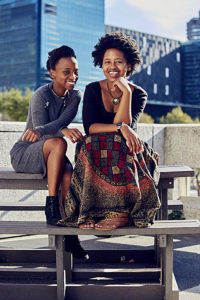
In the face of these obstacles, it becomes even more important to nurture emerging talent. After all, it’s hard to learn “on the job” when jobs are so hard to come by. The Theatre Arts Admin Collective are the heroes of this cause, leading a quiet revolution in reconceptulising what a theatre institution can and should be by making available discount rehearsal and performance space, free research archives and, thanks to the tireless work of Director Caroline Calburn, annual bursaries for emerging directors.
Support for performing arts
The resulting Emerging Theatre Director’s bursary has provided opportunities to 19 up-and-coming directors since 2010, many of whom who have gone on to become prolific and award-winning talents. Since 2011, the award has been sponsored by the Distell Foundation: real stalwarts of support for the performing arts in the city.
This year’s two winners are already showcasing their work. Thando Mangcu directed Pieces – an original work that ran at TAAC in Observatory until 22 July. Nwabisa Plaatjie is adapting and directing The Native Who Caused All The Trouble, which will run from until 5 August in the same venue.
As TAAC Director Caroline Calburn explains, “Young black women directors represented a small percentage of the overall profile of the Emerging Theatre Director’s Bursary winners over the past seven years. This had to change. There are so many astounding and highly talented black women with the potential to be ground-breaking directors – all they need is opportunity.”
“We hope that this bursary will allow two young women to take the spotlight, not just to develop their skills, but also to highlight the stories that they want to tell. We look forward to how Thando and Nwabisa will take on the challenges that their projects pose, and sculpt works that are bold and brave.”
Bold choices of script
Early indications are certainly promising: both winners made bold choices of script – for Mangcu, her own work Pieces, a futuristic comedy about group identity and, for Plaatjie, an adaptation of the South African drama The Native That Caused All The Trouble, a prescient script about a 1930s man who questions land ownership rights. “The courage of this man and his stubbornness resonates with me today and reflects concerns for the young people of this country right now,” comments Plaatjie, who promises some experimental choices to flex her adaptation muscles.
Both 2015 graduates of UCT drama, Mangcu and Plaatjie are no strangers to performative politics, citing the Fallism movement as definitional in their personal as well as their artistic development. “I do not think anything will ever move me the way that 2015 moved me and continues to move me,” said Plaatjie. “That year broke me emotionally and spiritually but it gives my voice an unshakable courage … 2015 was not only a disruption of studies and systems, but also of identity and that has made all the difference.”
The two women both produced work directly inspired by their experience: for Mangcu, co-writing and directing The Fall – a work directly based on the student protests which has had successful runs at the Baxter and is currently the Edinburgh Festival – and for Plaatje, Identirrhaging, which questioned the place of indigenous languages in higher learning institutions as well as 23 Years, a Month and 7 Days, looking at the multiple voices and perspectives present in a student protest.
Theatre bridging gaps
For Plaatjie, one of the drawcards of selecting The Native That Caused All The Trouble was the prospect of getting to work with an interracial and intergenerational cast. “When I was casting for this play, I wanted to work with people that are better than me, people that I look up to and who have worked with the most influential directors in South Africa,” she says. “The process has been great – they challenge me in so many different ways. They know their business and aren’t afraid to ask questions. The rehearsal room is a laboratory and I love it!” We wait to see what kind of chemistry these creative collaborations will spark.
As for theatre’s role in current volatile South African politics, both women are clear. “Sometimes politically charged spaces may be alienating, particularly for those who do not necessarily have an interest in politics, but who are socially aware and who are affected by politics. Theatre can bridge that gap,” argues Mancgu.
“I think that politically volatile environments have definitely invigorated the response to socially engaged art,” Plaatjie notes. “It doesn’t matter who you are or where you are from, I think that you owe it to yourself to disrupt your daily habits and just come experience something rich at the Theatre Arts Admin Collective in Observatory.”
Brava and encore.
What: The Native Who Caused all the Trouble
Where and when: Theatre Arts Admin Collective, Methodist Church Hall cnr Milton Road and Wesley Street, Observatory until 5 August 2017
Tickets: R60 at the door
WS