KAT MANNE
FanCon 2.0
The second annual FanCon was hosted from 29th April to 1st May at the Cape Town International Convention Centre. After last year’s con, it became apparent that a larger venue would be needed to accommodate the immense amount of geek culturists eager to attend the convention. Although we certainly missed the food trucks and gorgeous views of the coast from last year, the layout at the CTICC was amazing. The Artist Alley welcomed guests to view local art and international artists and have their comics signed at the Meet & Greet area. There was an abundance of clothes, crafts, games and comic book stalls with a particularly long line at the stall selling Harry Potter apparel.
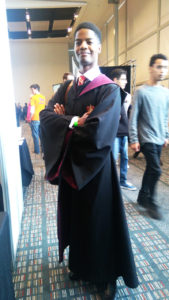
The hall also had a stage area for live performances, guest speakers, and cosplay competitions. Helpful volunteers sat in the gallery close to a Batman statue suffering selfie after selfie with excited DC fans. The gallery led through to the cafeteria, the foyer’s photo booth, a ‘chill zone’, an entire section for board gaming and a panel room for guest speakers around the corner. From taking selfies with cosplayers and sitting in the Iron Throne to the geek quizzes and cosplay masquerades held in the stage area, there was so much to do and so much to enter. The organisers have certainly upped their game by creating an exceptionally fun and safe space for Cape Town’s nerds.
Fandoms and exclusion
My early memories of cosplay and comic cons came from popular TV shows like Community and The Big Bang Theory. Some of the geekier characters would often cosplay their favourite characters embody a nerdiness that was sometimes undermined by ‘cooler’ characters. Geek culture entertains a lot of escapism and we often come across the trope of the bullied nerd who delves into fantasy worlds to escape torment at school. However, the community itself is not as welcoming and open to victims as it is portrayed on screen.
The online gaming community is vastly sexist, with trolls constantly harassing femme and female gamers online. New fans of long-running anime shows, new comic book or manga collectors and fans of popular film adaptions are criticised for not knowing enough about the original text and their opinions are marked as lesser or invalid. Nerd forums and groups have extensively discussed the alienation of fans and newcomers to fandoms by criticising their lack of knowledge or loyalty to a certain text.
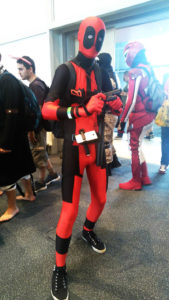
The entire approach is classist at first glance but there are many groups who are excluded from these fandoms because of their gender, orientation or race. This form of discrimination is called fandom-shaming and it upholds a deluded sense of purity by ‘nerd-jocks’ that others minorities. With all that in mind, could FanCon really bring Cape Town’s fandoms together in a safe space? It is a fairly new con and yet they were praised by the internationally acclaimed cosplay icon, Calssara during her farewell speech for being wonderfully inclusive and the audience seemed to agree.
Cosplay Talks and Competitions
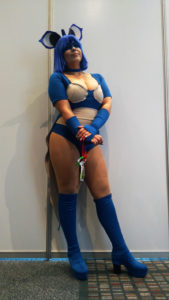
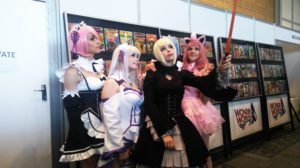
The three-day con featured two cosplay competitions welcoming any cosplayer to sign-up and join the fun. They kicked off with the Junior Cosplay Masquerade on Saturday, allowing cosplayers to show off their work without any pressure. After the Geek Quiz – hosted by the Cape Town-based comedian, Stuart Cairns – the Open Cosplay Competition commenced followed by the Cosplay Parade. Sunday brought on the Advanced Cosplay Competition with Calssara, KomboKitten, Kinpatsu, and Sashi Cosplay forming the judging panel. Some of the cosplayers had spent many months (even years!) on their costumes and others had invested up to R10 000 on materials.
The cosplayers spoke at their own panels to educate audiences on the ins and outs of cosplay creation and the cosplay community. Calssara and Tayla Barter took the stage to talk about becoming an international cosplayer. Barter also hosted her own panels on making armoured costumes and weapons for cosplay.
The Cosplayer’s Online Presence
Calssara’s panel on the dangers of cosplay on the internet was one of the most informative and engaging panels. She was adamant about protecting yourself online as people tend to disrespect the agency of female cosplayers.
“Google yourself constantly,” she advised and insisted that cosplayers should not be pressurised to do a cosplay that they are not comfortable with. When asking admin to remove images of yourself that you don’t like, she recommended that you “play sweet” and ask nicely or they may keep it up out of spite.
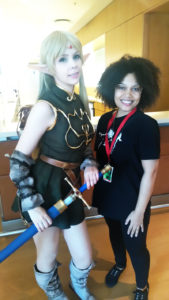
Mid-panel Calssara paused and asked the audience if everyone knew what rape culture was. There was a low murmur in response and she immediately explained victim-blaming and slut-shaming. Her response to those supporting rape culture was resolute:
“F@*k no.”
The audience laughed and she continued to say that friends should develop a “key word” to get out of difficult situations, especially if you’re a shy person. Calssara was adamant about taking friends with you, especially to photo shoots, so that you are not vulnerable and alone. She even touched on gaslighting, criticising people who say that victims of online harassment should toughen up.
“Why should I change myself just so people can be more violent to me?” she asked before explaining the difference between free speech and hate speech.
Blackface in Cosplay
When the issue of blackface came up, Calssara’s position was very clear.
“Especially if you’re a white person, never blacken your skin.”
Calssara said that she understood the issue a bit better when she encountered cosplayers dressed in “actual Nazi uniforms” thinking that she would appreciate it. She was astounded that they didn’t understand the trauma of Germany’s past and said that this made her understand a bit more about how POC cosplayers felt about blackface.
“Don’t darken your skin for cosplay. It’s really problematic.”
Cons and Support
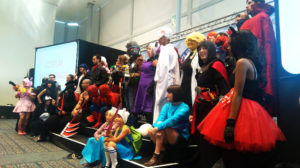
Calssara’s first cosplay was Jack O’Neill for a Stargate party she had in fifth grade. Her favourite con was held in Canada at a castle. She was served tea and cookies by distinguished butlers and her caretaker organised a private meeting for her with one of her favourite actresses.
“Yes, they are as nice as people say.”
She mentioned that other cons have had maid and host cafés, stage plays, balls and cosplay games requiring the participants to stay in character. Calssara concluded that there is support within the community and that cosplayers do not have to deal with their experiences alone.
“If you need someone to talk to, I am there for you.”
Artist Interactions
The convention created great exposure for local artists and cosplayers by providing a wide array of panels, workshops, discussions and portfolio reviews to educate creatives on the industry and help them hone their skills. Matt Hawkins, Image Comics veteran and writer of 30 titles including Think Tank and The Tithe did a talk about writing for Top Cow. He joined Marz, Powell and Layman in the panel room to discuss creator-owned comics and a separate panel with Marz on Day 3 titled: “How Do I Break into Comics 101”. Hawkins was also available for portfolio reviews at his stand on Day 2 and 3 of the con.
Comic Book Legends
The iconic comic book artist and creator of The Goon, Eric Powell appeared on stage alongside the renowned author of Chew to tell us about how they use humour and satire in comics. Layman announced that his humour was heavily influenced by Douglas Adams whereas Powell jokingly asked if we had ever heard of Monty Python. They both agreed that humour is underrated and important but Layman mentioned that it is becoming difficult to navigate satire because of a growing sensitivity.
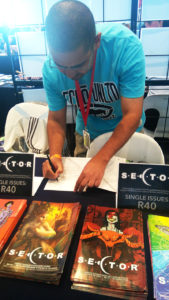
“I wanna make you cry but I wanna make you laugh too. At the end of the day, I don’t want you to be miserable.” – J.L.
“[Humour is] terribly important right now – just for my personal state … there’s no better way to knock down a tyrant a few pegs than with satire. It’s essential.” – E.P.
A fan asked about the alienation of Trump supporters and how it would affect their readership. Both Powell and Layman were unfazed.
“I don’t want you as my audience if you’re a bigot. I don’t want you and I don’t want your money.” – J.L.
“An artist is supposed to be an activist.” – E.P.
When asked about their position on representation and diversity in comics, their lengthy responses took us to the end of the talk. Layman mentioned that his son is part Asian and that he “wanted him to have a hero that is not a cliché.”
“Everybody looked like me – overweight white guy.” – E.P.
Powell expanded on Layman’s point saying that he enjoys diversity in the industry and that it makes him happy to see diverse representation. He mentioned writing in characters for this purpose.
“I’ve gotten in trouble for that but you get more readership.” – E.P.
Representation in Comics
It seems that Lauren Beukes agreed with this sentiment as she criticised the types of female characters created in the comic book industry. The award-winning South African author also wrote Fairest: The Hidden Kingdom featuring the art of Inaki Miranda and co-wrote Survivors’ Club with Dale Halvorsen and artist, Ryan Kelly. She sat down to discuss the representation of women in comics with the esteemed American comic book writer Ron Marz who worked extensively on Silver Surfer, Green Lantern and Witchblade. The guest speakers were asked if “we have levelled the playing field” in the industry and Beukes answered with an emphatic “no!”, stating that (amongst many other issues) sexual harassment is still a major factor affecting female writers and artists.
Diverse Characters
Marz went on to say that it is difficult to write female characters drawing on an incident where he had a character murdered and was forced to censor the artwork, leading to gory assumptions by the public who cared more about the woman who only featured in eight issues as opposed to a male character who was in about hundred issues and nobody seemed to care about his death. Beukes continued to point out that representation matters for all minorities, including people of colour, the LGBTI community and people from different cultures. This was something they both agreed on but Marz pointed out that he was not entirely comfortable writing diverse characters, or rather that he would like to but doubted that he would be allowed to. Beukes noted that more diverse female characters were still needed in comics, although she’d had enough of the “bitch anti-hero” doing everything in heels.
Local Geeks
Unfortunately, the Vortex Inc. team could not make it in time for the con and the spotlight was put on local comic book artist Loyiso Mkize. Mkize is the founder of Kwezi, a South African coming-of-age superhero comic book series and he hosted a panel on the demand for black superheroes in the industry. SA artists Sean Izaakse and Warren Louw also featured on the program, meeting local artists at their own stands in the Artist Alley. City Varsity students were filming the talks; their stand exhibiting body art and prosthetics could be found in the foyer close to the SANCCOB stand accepting donations to help build a penguin hospital by encouraging Adventure Time fans to help their own little Gunter. The local artists and promoters in and around the Artist Alley were very eager to talk about their work and engaged with guests tirelessly throughout the convention. The Unplug Yourself section hosted some serious local table-top gamers who happily taught noobs the ins and outs of their favourite games and versed some confident players.
Incredible turn-out
In con-clusion, the turn-out at this year’s FanCon was incredible. Fortunately, it wasn’t completely packed throughout each day. The influx of geeks slowed as the day progressed, so introverted nerds and cosplay fans didn’t have to experience over-stimulation for too long. The panels and workshops were informative, the cosplay was fantastic and the atmosphere at the convention was simply euphoric. The con was highly successful and incorporated a togetherness that John Layman mentioned in one of his panels:
“The geek culture kind of transcends cultures and languages.”
I don’t think he knows that he was referencing ubuntu.
WS